

Composers leave works unfinished for many different reasons including untimely death, loss of inspiration, perfectionism, and, in some cases, a feeling that the work is already complete despite being technically incomplete. This February, the Daily Classical Music Post will explore unfinished works and find out the ways in which they are performed today, either still incomplete or finished by other composers.
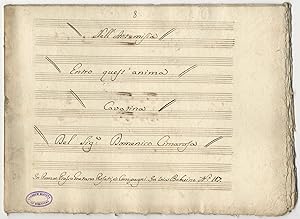
Domenico Cimarosa – Artemisia: Aria “Entro quest’anima”
My extremely cursory survey, conducted as I was researching music for this month’s posts, has revealed exclusively that unfinished operas outnumber all other unfinished classical music works. The reasons for this include death of the composer; problems with either finding a librettist or keeping the librettist interested in the project; too many compromises including singers’ demands and censorship; and a collapse in funding or a change in patronage.
The Italian composer Domenico Cimarosa (1749–1801) died before he could complete what was his final opera, Artemisia (1801). (Cimarosa actually composed another opera with the same title in 1797, to a different libretto.) The libretto by Count Giovanni Battista Colloredo was in three acts but Cimarosa only managed to complete most of the music for the first two acts. Those two acts of the opera premiered just days after the composer’s death, with some additions by other musicians. The curtain was lowered at the exact moment at which Cimarosa wrote his last note.
Margaret R. Bakker King wrote, “The work follows the conventional framework of late eighteenth-century Italian opera seria, featuring a sequence of accompanied recitatives, da capo or sonata-form arias, and occasional ensembles, particularly in act finales, to advance the dramatic narrative across its acts. This structure reflects Cimarosa’s roots in the Neapolitan school, where transitional sinfonias and orchestral introductions often bridged scenes, though by the time of Artemisia, his approach had evolved toward more integrated, sonata-influenced forms rather than strictly traditional da capo arias dominant in earlier Neapolitan opere serie.” Cimarosa’s melodic inventiveness and dramatic flair is evident throughout the completed acts, particularly in the beautifully lyrical Act II aria “Entro quest’anima,” written for the character of Artemisia.
My classical music post for today is Domenico Cimarosa: Artemisia: “Entro quest’anima.”


Leave a Reply