

Happy New Year! I’ll be taking a break from writing new posts this month, but never fear, there will still be a Daily Classical Music Post! This January, I’ll be sharing some DCMPs from Januarys in the past. And stay tuned for a whole new theme in February!
First posted January 2014
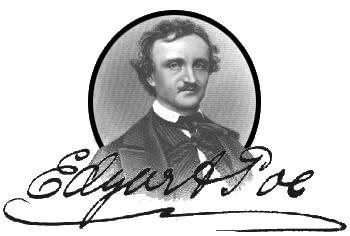
Today is the anniversary of the birth of Edgar Allan Poe (19 January 1809–7 October 1849).
André Caplet : Conte fantastique aprés ‘Le Masque de la Mort rouge’ for harp & string quartet (1919)
Poe’s stories are sinister, disturbing, mysterious, and bizarre. He is considered to be the inventor of Western English-language detective fiction with the publication in 1841 of his “The Murders in the Rue Morgue.” Many of his works have been turned into movies, songs, operas, and other works.
One of Poe’s best-known stories is “The Masque of the Red Death,” published in 1842. This story is a great example of Gothic fiction; some people believe that it is all about the inevitability of death, as it doesn’t matter what the protagonist, Prince Prospero, does to avoid the Red Death: it gets him and everyone else in the end.
Many of you may know the great 1964 Vincent Price movie based on “The Masque of the Red Death,” but I’ll wager that very few of you will be acquainted with Conte fantastique for harp and string quartet by the French composer André Caplet (1878–1925). Caplet began composing this work inspired by “The Masque of the Red Death” in 1909 and completed it in 1924.
Roger Nichols said, “André Caplet died in 1925 from the effects of poison gas in the trenches of the First World War. He was only forty-seven. His death was widely regarded as a great tragedy for French music. . . . The Conte fantastique for harp and strings, inspired by Poe’s tale ‘The Masque of the Red Death,’ was published in 1924, but was based on an unpublished ‘symphonic study’ dating from 1909. It is impossible therefore, without seeing this study, to be certain of what in the Conte is post-war and what pre-war. What is unmistakable, though, is Caplet’s determination to rethink instrumental capabilities. Just as he did with the solo instrument in the Epiphanie for cello and orchestra of 1923, and before that with the voice in the Inscriptions champêtres of 1914, so here he liberates the harp from its traditional role of being purely pastoral, decorative, and decorous. . . . The very first page of the score shows how far Caplet has moved in twenty years from orthodox, Prix de Rome platitudes. The harp’s first notes are marked ‘haletant’—’breathless.’ Since the harp cannot breathe, and not breathing will hardly help the harpist, this may seem on the face of it a nonsensical instruction. But Caplet’s idea is surely that the phrase should give the impression of the harp as a wind instrument whose breath is abruptly cut off after just six notes, where the player is ordered to damp the strings (‘étouffez’). . . . Any composer would have to incorporate somehow the chiming of the ebony clock to mark the hours of the revels, at which ‘the dreams are still-frozen as they stand.’ Caplet chooses to give the harpist only the chimes of eleven o’clock and the more fateful ones of midnight, upon which the masked figure of the Red Death appears, ‘tall and gaunt, and shrouded from head to foot in the habiliments of the grave.’ The ‘buzz, or murmur’ of the assembled company at this apparition is expressed in string tremolos, glissandos, and harmonics that truly look forward to the textures imagined by Boulez thirty years later. Caplet’s death was indeed a great tragedy.”
My classical music post today is André Caplet: Conte fantastique.


Leave a Reply