

Happy New Year! I’ll be taking a break from writing new posts this month, but never fear, there will still be a Daily Classical Music Post! This January, I’ll be sharing some DCMPs from Januarys in the past. And stay tuned for a whole new theme in February!
First posted January 2016
January 2016 is Celebrate 19th-Century American Composers on the Daily Classical Music Post!
John Knowles Paine – Symphony No.1 in C-minor, Op.23 (1875)
As Douglas Shadle says in his recent book Orchestrating the Nation, most present-day concertgoers may never hear any of the 100+ symphonies composed by American composers in the 19th century. To most classical music fans, the 19th century is all about the Russians, the Germans, perhaps some other Europeans, but American music of that time is considered to be popular (e.g., Foster). The first American composer most people will have heard is Ives.
This January, the Daily Classical Music Post aims to correct this. As the music of so many 19th-century American composers is either lost or not performed, it has not been all that easy to find large-scale works. During this month, you will perhaps discover some music that will pique your interest, and perhaps more ensembles will look into performing something other than the usual European standards!
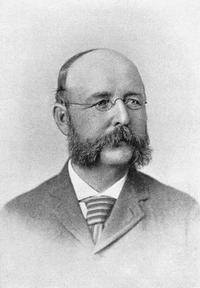
John Knowles Paine (1839–1906) was the first American-born composer to become well-known for his orchestral compositions. He was the de facto leader of the Boston Six (we’ll be hearing from them during this month as well), the group of classical musicians whose output was a vital part of developing an American voice in classical composition.
Paine’s Symphony No. 1 was composed in the early 1870s. It premiered in Boston on 26 January 1876. JoAnn Falletta notes that this symphony “is credited by some musicologists with writing the first actual symphony in our country—a piece that was enthusiastically received in 1876. Paine’s work was based on the European traditions he cherished, building upon the beautiful inspiration of the early German romanticism he learned from his studies in Berlin. . . . Why was such important work forgotten? I believe that this unfortunate neglect was largely political—after World War I, it became important for music to sound ‘American’, and works which resonated with German tradition were dismissed. We sadly lost sight of the artistry of John Knowles Paine and composers of similar influences because it was not popular to sound in any way ‘Germanic’.”
Although you’d probably have to look pretty hard to find a live performance of Paine’s first symphony, at least there is a very good recording of it on YouTube, and it is a great way to start off this month and New Year!
My classical music post for today is John Knowles Paine: Symphony No. 1.


Leave a Reply