

December is a month for reflection, a time to look back on the past year before looking ahead to the new one. In 2025, there was so much great music to share that I wasn’t able to fit all of it in! So this December, the Daily Classical Music Post will revisit the theme for each month and share a few of the works that didn’t make the cut.
[Ding Shande] Long March Symphony Op.16 (Score-Video)
[October 2025: Music is a journey, taking listeners on an emotional and sometimes adventurous sonic path through time to new places both physical and spiritual. Some composers have chosen actual methods of transportation as their theme for this excursion. This October, the Daily Classical Music Post will feature music celebrating methods of transportation, from the land to the sea to the air.]
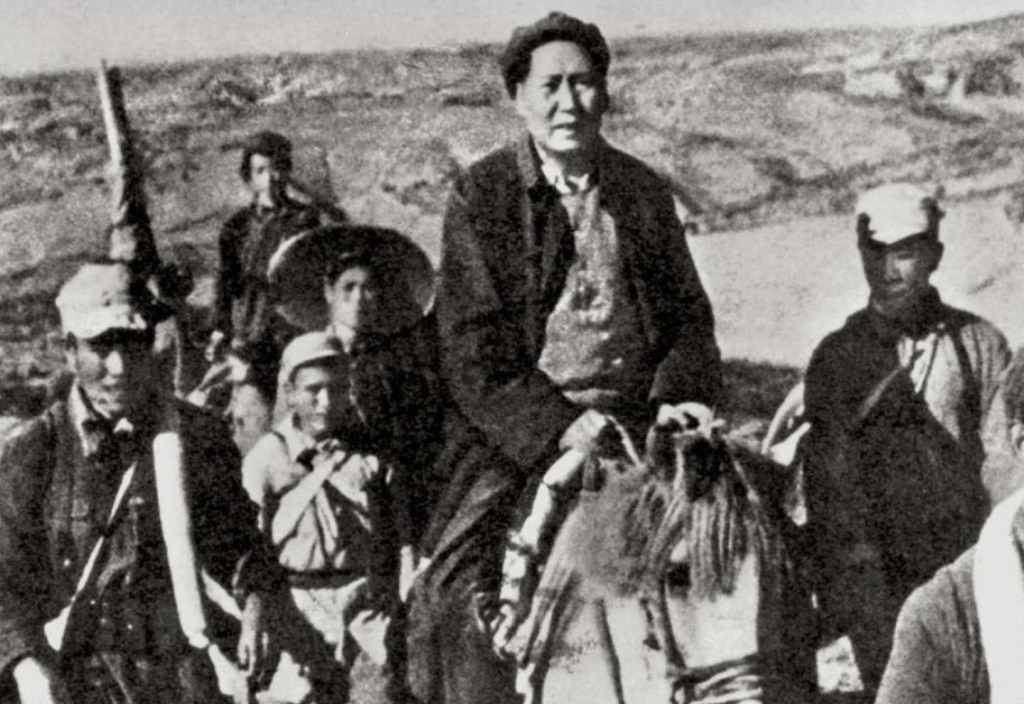
The Long March was a military retreat by the Chinese Red Army and Chinese Communist Party from Kuomintang forces during the Chinese Civil War between October 1934 and October 1935. Of the roughly 100,000 troops that retreated, barely 8,000 survived the Long March. Mao Zedong’s leadership during the Long March brought him immense prestige and support and marked the beginning of his absolute control over China.
The Chinese composer Ding Shande (1911–1995) composed the Long March symphony in 1962 .The work is in five movements: I. Embarking on the Road; II. Red Army, The Beloved of the Various Nationalities; III. Rush Capture of the Luting Bridge; IV. Crossing Snowy Mountains and Grassland; and V. Triumphant Junction. Ding said, “I finished my composition the Long March Symphony in 1962, after working for some three years from the original conception to writing the last notes of the score. Throughout this period it was the Long March itself, the amazing achievement of the Chinese Worker’s and Peasants’ Red Army over a distance of 25,000 miles, that was the powerful driving-force urging and encouraging me on.” Ding spent two years visiting all of the areas along the route of the Long March, collecting folk songs from the regions to use in the symphony. The Long March Symphony is considered to be one of the greatest Chinese symphonies in the repertoire.
Robert Clements wrote, “The musical language of the symphony is late Romantic, with a strong dramatic drive. . . . Melodic invention is continuous & subtle; with a wonderful use of variation technique & imaginative orchestration, including some lovely instrumental solos in the first & fourth movements (the Crossing Snowy Mountains & Grassland movement ends in magnificent melody for solo violin which soars over a murmuring orchestra, possibly the most wonderful touch in a symphony filled with wonderful touches).”
My classical music post for today is Ding Shande: Long March Symphony.


Leave a Reply