

December is a month for reflection, a time to look back on the past year before looking ahead to the new one. In 2025, there was so much great music to share that I wasn’t able to fit all of it in! So this December, the Daily Classical Music Post will revisit the theme for each month and share a few of the works that didn’t make the cut.
D.Shostakovich ballet “The Golden Age” 2007.
[September 2025: The myth that athletes are the “cool kids” and classical musicians are not is constantly repeated in popular culture, as if these two groups are in opposition. However, many classical composers not only loved to watch and play sports, they also immortalized that love in their music. This September, the Daily Classical Music Post explores classical music about sports.]
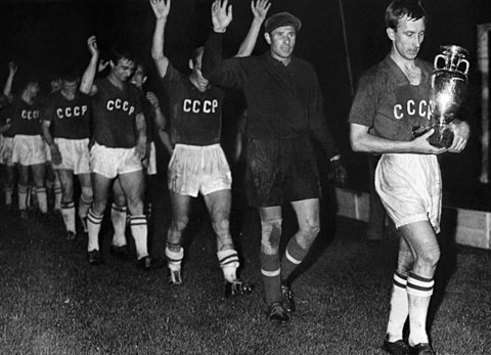
Football (aka soccer) was popular in Russia before the Revolution. After the Bolsheviks took control of the government, football was state-sponsored, with authorities recognizing its usefulness as a propaganda tool for fitness and unity. The USSR Top League was formed in 1936 with state-backed clubs representing institutions. Ukrainian giant Dynamo Kyiv dominated along with several Moscow clubs. The USSR played its first international match as a nation against Turkey in 1924, competed in the World Cup for the first time in 1958, and won the first European championship in 1960 by beating the former Yugoslavia. In 1945, Dynamo Moscow undertook a goodwill tour of England, playing Chelsea and Arsenal.
The Soviet Russian composer Dmitri Shostakovich (1906–1975) was fanatical about soccer and was even a qualified referee. He is said to have coined the phrase “Football is the ballet of the masses.” His favorite team was Zenit Leningrad (now Zenit St. Petersburg). The Golden Age, written in 1929 with a libretto by Alexander Ivanovsky, told the story of a vigorous young communist soccer team that traveled to the West (long before this was a reality) and whose wholesome sportsmanship had the capitalists joining their cause. Along the way, the visitors meet various badly behaved examples of capitalist decadence. There is even a match depicted, which begins with a referee’s whistle.
The programme notes for a 1983 revival of the ballet with an updated libretto said, “Shostakovich’s 1930 ballet The Golden Age explores a satirical yet politically-charged scenario: a Soviet soccer team visits a Western capitalist country and allies itself with the native working class to overthrow the decadent and corrupt bourgeoisie. Drawing on Western dance and music styles (including a carbonated Can-Can, an energetic Polka, and a humorous arrangement of Tea for Two), the work was initially censored by the Soviet regime.”
The Golden Age is a wonderful example of Shostakovich in a slightly lighter mood. There are marvelous dissonances throughout as well as terrific contrapuntal writing.
My classical music post for today is Dmitri Shostakovich: The Golden Age.


Leave a Reply