

December is a month for reflection, a time to look back on the past year before looking ahead to the new one. In 2025, there was so much great music to share that I wasn’t able to fit all of it in! So this December, the Daily Classical Music Post will revisit the theme for each month and share a few of the works that didn’t make the cut.
Men of Iron and the Golden Spike, Zhou Long; Su Wei (b.1953), libretto
[May 2025: The first day of May is International Workers’ Day. Workers and the labour movements are celebrated worldwide on this day. This May, the Daily Classical Music Post will honour and commemorate the struggles, achievements, rights, and gains of workers through music.]
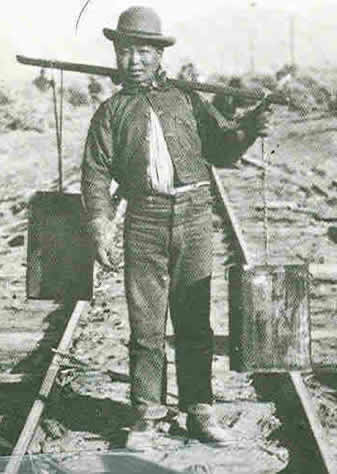
In the 1860s, railroad companies in the western United States of America faced problems keeping workers, mainly because of the dangerous working conditions and low pay. The companies decided to look overseas for cheap labour, and Chinese immigrants were recruited. Between 1865 and 1869, thousands of Chinese workers blasted through mountains and endured harsh weather and terrible working conditions for very little pay. Their contributions were unacknowledged when the transcontinental tracks were completed, and even worse, they were marginalized by racist laws like the Chinese Exclusion Act of 1882.
Sharon Chin wrote, “When the Golden Spike was hammered in by American railroad tycoon Leland Stanford in 1869, commemorating the completion of the United States’ first transcontinental railroad, the estimated 20,000 Chinese migrant railroad workers who had labored on this endeavor were unceremoniously missing.” In 2013, Jindong Cai and Gordon H. Chang commissioned the Chinese-American composer Zhou Long (born 1953) and the writer Su Wei to write a “grand symphonic oratorio” to commemorate these forgotten Chinese workers.
Men of Iron and the Golden Spike premiered in 2019. The oratorio is a wonderful example of the ways in which the Pulitzer Prize–winning composer Zhou combines Chinese folk music and Western compositional techniques. The oratorio is in nine movements: Prologue; The Endless Sea; Coolie Work Chant; Song of the Chinese Railroadmen; These Chinamen; My name is . . . ; Snow on a New Years Even; Avalanche; and The Golden Spike/Epilogue. The story captures the journey of the Chinese railroad workers to the USA; their experiences while working on the railroad; interactions with other labourers, including an Irish foreman and his daughter; a tragic incident; and the hammering in of the Golden Spike.
Claire Ning Fang wrote, “[Men of Iron and the Golden Spike] is a beautiful performance with stunning vocals and ingenious integration of Chinese instruments and melodies within a Western-style orchestra. The oratorio is bilingual, reflecting the combination of cultures that occurred during the construction of the railroad.”
My classical music post for today is Zhou Long: Men of Iron and the Golden Spike.


Leave a Reply