

December is a month for reflection, a time to look back on the past year before looking ahead to the new one. In 2025, there was so much great music to share that I wasn’t able to fit all of it in! So this December, the Daily Classical Music Post will revisit the theme for each month and share a few of the works that didn’t make the cut.
Yumeji for Orchestra of Japanese and Western Instruments and Mixed chorus
[March 2025: There has always been a cultural exchange between the arbitrarily divided regions labelled East and West. However, the overwhelming influence of European and U.S. art and folk music often obliterated the traditional classical music in Asia. This March, the Daily Classical Music Post explores music by Asian composers who have sought to redress the balance.]
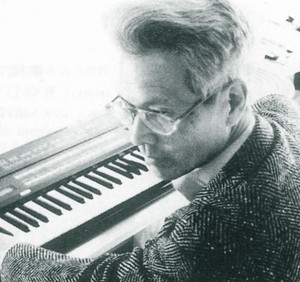
The Japanese composer Makoto Shinohara (1931–2024) was known for the interesting way in which he combined Western and traditional Japanese music as well as for his experiments with Western acoustic and electronic music. He studied with and collaborated with several Western European composers, including Olivier Messiaen, Karlheinz Stockhausen, and Gottfried Michael Koenig. Shinohara won many awards from European and U.S. universities and organizations.
Thomas Groetz wrote, “Like his fellow Japanese composers Ichiyanagi Toshi, Yuasa Joji, Ishii Maki, and others, Shinohara Makoto was interested in the instruments and aesthetics of the traditional music of his native country, which are typically situated within a ceremonial or cultic context. In the early 1970s, he began creating chamber music works composed for Japanese instruments such as the koto, shakuhachi, and shamisen. In addition, Shinohara worked on fusing Western and Japanese instruments as well as their associated aesthetic approaches.”
Yumeji (Ways of Dreams) was composed in 1992 for an orchestra made up of Japanese and Western instruments and mixed chorus. The premiere took place during the Min-On Contemporary Music Festival in 1992. The association Min-On, meaning “the people’s music,” was founded in 1963 to introduce people in Japan to Japanese classical music as well as classical music from other parts of the world. Min-On also sends Japanese musicians and performers around the world, aiming to promote peace through cultural exchanges.
Shinohara’s interest in electronic music and Western tonalities is evident from the very first notes and sounds of Yumeji. The mix of serialism with Japanese harmonies enhances the dream-like soundscape, and the otherworldly choir adds a slight sense of foreboding to the atmosphere.
My classical music post for today is Makoto Shinohara: Yumeji.


Leave a Reply