

The myth that athletes are the “cool kids” and classical musicians are not is constantly repeated in popular culture, as if these two groups are in opposition. However, many classical composers not only loved to watch and play sports, they also immortalized that love in their music. This September, the Daily Classical Music Post explores classical music about sports.
Martin Smolka: Nagano (2001 – 2003)
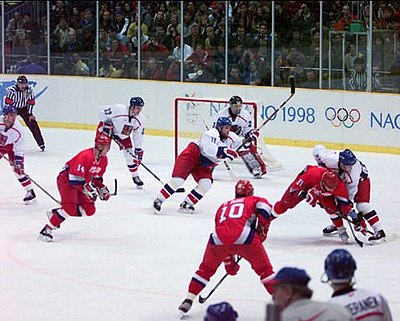
Ice hockey is a gripping sport, combining speed skating and gracefulness with aggression and bodies crashing into the boards. In addition to professional leagues around the world, ice hockey has been included in the Olympic Games since 1920. At the 1998 Games in Nagano, Japan, the Czech national team won its first gold medal in ice hockey, defeating the favourites, Canada, and Russia along the way.
Valérie Drasnarova wrote, “Regarded as the country’s best hockey player of the 20th century, Vladimír Martinec recalls the behind-the-scenes moments of the tournament, reflecting on his role as assistant coach. ‘These were our best players. They only needed a little bit of guidance—they already knew everything. They understood the game. It was just a small nudge to help things click’. And click it did. In the 49th minute, Petr Svoboda’s shot found the back of the net and set off the nationwide celebrations. The score: 1–0. And it stayed that way until the final buzzer.”
The Czech composer Martin Smolka (born 1959) was inspired by the victory of the Czech hockey team to compose an opera “in three periods and overtime,” Nagano (2001–2003). The libretto by the composer and Jaroslav Dušek begins with the players arriving at the arena, continues in the locker room, and includes a character called “Ice Rink” that challenges the Czech players to give their best performance ever. The opera concludes with the triumphant return of the players to Prague and celebrations of their victory.
Smolka wrote in the programme notes, “At first glance there is a contradiction here—the aristocratic genre of opera, the noble edifice of the Estates Theatre, and against that hockey—a profane spectacle with maximum appeal to the masses, with sweat, violence, yelling, and crudity. However, our opera (from the sweat, stench, and dust of the theatrical backstage) also highlights the dignified roots of sports and the Olympic Games and recalls the ancient Greek ideal of Kalokagathia, the heroism of supreme athletic performances, and the valour of the best hockey players in the world. And in the same breath it reminds us that hockey and everything surrounding it are only a game, that it suffices to shift the angle of view only a little and it can be seen as something very funny.”
My classical music post for today is Martin Smolka’s Nagano.


Leave a Reply