

The myth that athletes are the “cool kids” and classical musicians are not is constantly repeated in popular culture, as if these two groups are in opposition. However, many classical composers not only loved to watch and play sports, they also immortalized that love in their music. This September, the Daily Classical Music Post explores classical music about sports.
Debussy: Jeux, Poème dansé, CD 133
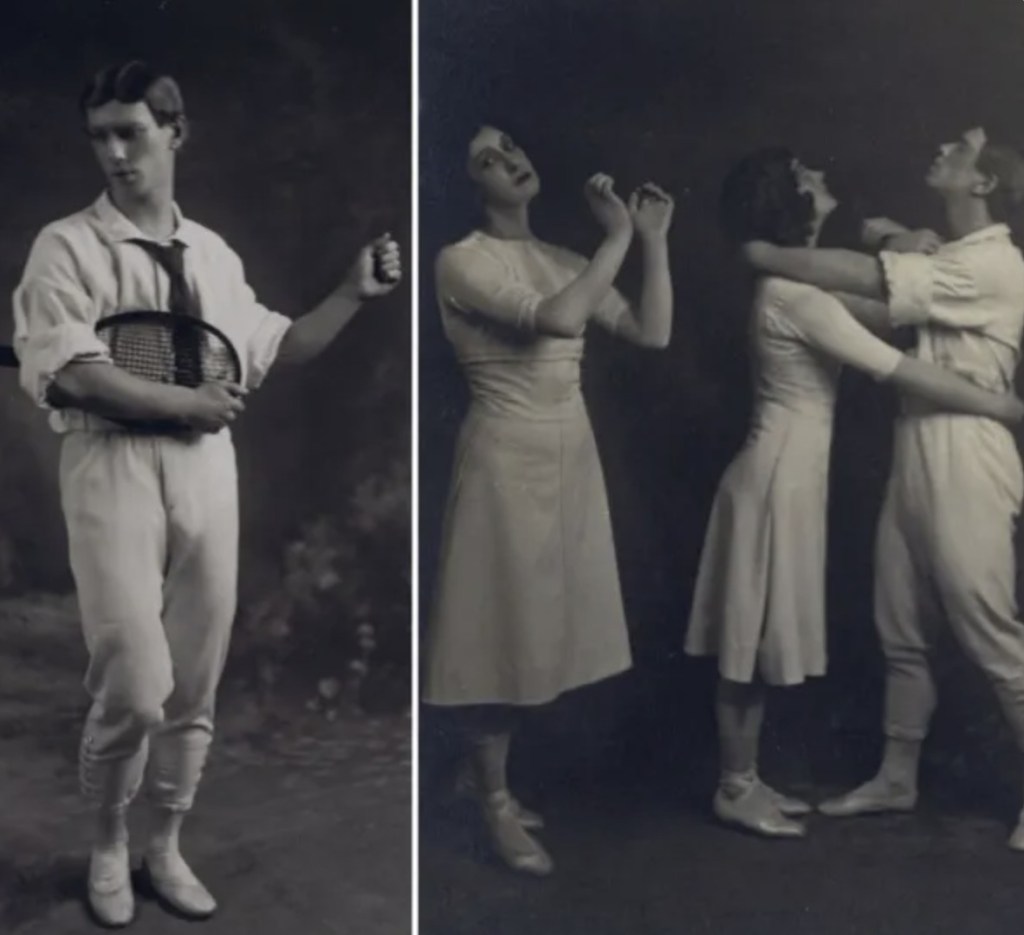
One of the most famous classical music pieces about the game of tennis actually has very little to do with tennis at all, save for the fact that it is set on and around a tennis game. In 1912, Sergei Diaghilev commissioned the French composer Claude Debussy (1862–1918) to write a ballet for the Ballets Russes. Debussy composed Jeux within one month. The choreography was by Vaslav Nijinsky.
Richard Whitehouse wrote, “Debussy’s elusive ‘poème dansé’ stands at the intersection between late Romanticism and modernism. . . . Its scenario was described at the premiere on the following lines: ‘A garden at dusk. A tennis ball has been lost, a boy and two girls search for it. The artificial light of large electric lamps sheds fantastic rays about them and suggests the idea of childish games—they play hide and seek, they try to catch one another, they quarrel, they sulk without cause, they embrace. The spell is broken by another tennis ball thrown mischievously by an unknown hand. Surprised and alarmed, they disperse into the nocturnal depths of the garden’.”
Jeux was not well received at its premiere. Christopher Dingle wrote, “It is doubtful that any theatre has experienced a more remarkable few weeks than the newly opened Théâtre des Champs-Elysées, Paris in May 1913. It was the scene on 29 May of the most notorious premiere of them all: Stravinsky’s Rite of Spring. . . . [On 15 May 1913] Diaghilev’s Ballets Russes unveiled a work with what turned out to be the last completed orchestral music by Debussy: Jeux. This ‘poème dansé’ has come to be seen as equally important as the Rite in its own way, but being eclipsed by the reception of Stravinsky’s tour de force was just one factor among many working against Jeux getting a good start. . . . Jeux is understated and suffused with light. It’s chromatic, yet never harsh; rhythmically complex, yet fleet-footed and graceful. Analysing it is like trying to capture wisps of mist.”
Debussy was very unhappy with Nijinsky’s choreography; he told a friend, “This man adds the demiquavers with his feet, proves it with his arms, then, suddenly struck with hemiplegia, he watches the music go by with a wicked eye. It seems that this is called the ‘stylization of gesture’.” Over time, the beauty of Debussy’s music has been recognized, and Jeux is now celebrated as a pivotal work in the development of music in the 20th century.
My classical music post for today is Claude Debussy’s Jeux.


Leave a Reply