

The myth that athletes are the “cool kids” and classical musicians are not is constantly repeated in popular culture, as if these two groups are in opposition. However, many classical composers not only loved to watch and play sports, they also immortalized that love in their music. This September, the Daily Classical Music Post explores classical music about sports.
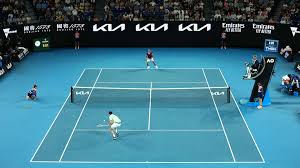
Sometimes when I watch a tennis match, I like taking a break from watching the players to observe the spectators as they look in one direction, then the other, then back again, over and over, as the ball is volleyed back and forth.
The Argentine-German composer Mauricio Kagel (1931–2008) directed performers to make certain facial expressions, told them how to enter and exit the stage, and instructed them on how to interact with the other performers. Some critics described his music as a part of the theatre of the absurd. Kagel also made films of some of his compositions, exploring sound, instrumentation, and the social context of music.
Match (1964) is a “tennis game” for cellists with a percussionist as umpire. It is one of the best-known of his instrumental theatre works. A review in Gramophone said, “Match is one of the unsung masterpieces of post war avant-garderie. Its premise might feel a tad whimsical—the ‘match’ is between two cellists who play a game of musical ping-pong, flinging material over the net, as the percussionist acts as an officious referee—but, typically for Kagel, this theatrical starting-point is only relevant for what it can render in sound.”
In 1966, Kagel made a film of Match, called Match für drei Spieler (Match for Three Players). Zachàr Laskewicz wrote, “Kagel’s attraction to Surrealism is most apparent in his film works. Representation of the dream consciousness is particularly apparent in his film Match, if not only because of the fact that he dreamt the composition on three consecutive nights before the work was composed. The Surrealist quality of the film is undeniable, with echoes of Cocteau, René Clair and possibly Buñuel. . . . In Match, the composer does not seek the fusion of film and music in the conventional sense, nor does it aim at their peaceful co-existence which doesn’t reflect Kagel’s dialectical interest in his mediums. Rather, film and music achieve through rigorous composition a unity whose dialectical nature can only be preserved in their dissociation, which in turn results in a continual tension between them.”
My classical music post for today is Mauricio Kagel’s Match.


Leave a Reply