

The myth that athletes are the “cool kids” and classical musicians are not is constantly repeated in popular culture, as if these two groups are in opposition. However, many classical composers not only loved to watch and play sports, they also immortalized that love in their music. This September, the Daily Classical Music Post explores classical music about sports.
Ice skating was originally developed as a way to save energy during winter journeys. By the 17th century, ice skating had become a popular form of recreation, and clubs popped up in several different European countries. The ice skating practiced in these clubs was closer to figure skating than speed skating. However, by the early 19th century, skating matches were held in England, Scotland, and the Netherlands. Figure skating also entered the world of sport by the end of the 19th century, and rules were established by the International Skating Union in 1892.
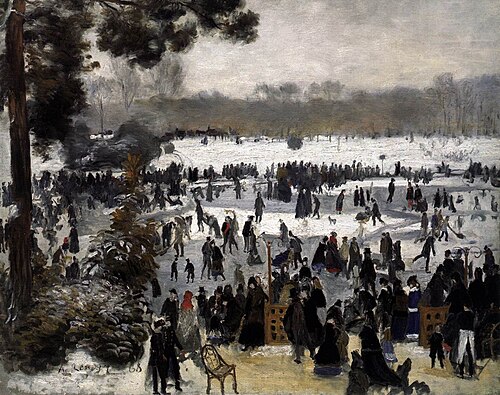
One of the places that both recreational skaters and competitive skaters frequented was the cercle des patineurs (rink of skaters) at the Bois de Boulogne, Paris. This park has several lakes within its boundaries, and when the lakes froze over in the winter, hundreds of people came out to ice skate. The French composer Émile Waldteufel (1837–1915) was inspired by the cercle des patineurs in 1882 to write Les Patineurs (The Ice Skaters), Op. 183. This is one of his most famous waltzes and perhaps one of the most famous waltzes ever composed. It was an immediate success and was performed at balls, concerts, and salons throughout Europe. Piano arrangements added to its popularity. Modern audiences know it from dozens of movies and television shows.
Les Patineurs is a wonderful portrayal of ice skaters gliding on the frozen lake. Jean-Michel Serres wrote, “[Waldteufel] was a contemporary of Johann Strauss II and shared with him a talent for creating captivating melodies and driving rhythms. [Les Patineurs] fits perfectly into this style, reflecting the era’s enthusiasm for outdoor recreation and social entertainment. . . . Like many waltzes of the period, Les Patineurs follows a classical waltz structure, typically beginning with an introduction that sets the scene, followed by several distinct waltz themes that are often repeated and interwoven. The work ends with a coda that repeats excerpts from the main themes, leading to a brilliant and spirited conclusion. . . . Waldteufel skillfully uses the different sections of the orchestra to create a sense of movement and fluidity, mimicking the movements of skaters on ice.”
My classical music post for today is Émile Waldteufel’s Les Patineurs.


Leave a Reply