

The myth that athletes are the “cool kids” and classical musicians are not is constantly repeated in popular culture, as if these two groups are in opposition. However, many classical composers not only loved to watch and play sports, they also immortalized that love in their music. This September, the Daily Classical Music Post explores classical music about sports.
Victor Bendix(1851-1926):Symphony Nº 1 in C major,Op.16″Mountain Climbing”(1876-82)
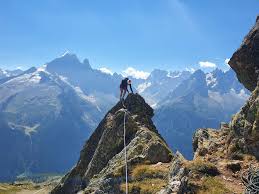
Mountain climbing is an obsession for some people. As George Mallory reportedly said when a reporter asked him why he wanted to climb Sagamartha (aka Mount Everest), “Because it’s there.” What he also said was, “The first question you will ask and which I must try to answer is this, ‘what is the use of climbing Mount Everest?’ and my answer at once must be, ‘It’s no use.’ . . . What we get from this adventure is just sheer joy.”
The Danish composer Victor Bendix (1851–1926) never achieved the recognition that wanted. Instead, he became famous for his affair with a well-known pianist who then had his child out of wedlock; this scandal was enough to pretty much end his career. Even to this day, he is for the most part ignored by the Danish musical establishment.
Ralph Graves wrote, “I feel sorry for Victor Bendix. At the start of his career, Bendix was too avant-garde for Danish audiences. And at the end of it, he was considered too old-fashioned. . . . Symphony No. 1 ‘Fjældstigning’ was written in 1882. This is a big, ambitious work, full of excitement and energy. The title refers to the symphony’s over-arching theme. That is, climbing a mountain peak to a hidden temple.”
Bendix himself provided a programme note to Symphony No. 1: “Drawing a picture of a laborious hike towards the temple on the mountain peak, the symphony deals with a person’s emancipatory development from frivolous aimlessness to a life guided by a higher idea. In the first part of the symphony—the struggle before decision—the motifs embodying the ideal, despair and hope interact. The second part, a Nocturne, presents a nocturnal ramble through the mountain woods, which alluring monuments of the past seek to hinder. In the third part, marcia solenne, the induction into the temple is portrayed. Finally, in the last part we have a picture of the joy of a life lived through work in the service of the idea.”
My classical music post for today is Victor Bendix’s Symphony No. 1, “Fjældstigning.”


Leave a Reply