

“Everybody talks about the weather, but nobody does anything about it.”—Charles Dudley Warner
Classical music composers may not do anything about the weather, but they often have been inspired by weather and other natural phenomena. This August, the Daily Classical Music Post will explore some of these works and learn about the ways that different combinations of instruments can depict storms, volcanic eruptions, and climate change.
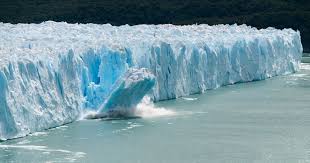
Liquid Interface: I. Glaciers Calving
One of the most alarming effects of global warming is the very visible shrinking and disappearance of glaciers all around the world. Without the protective cover of ice, the Earth heats up more quickly, and the glacial melt has a marked influence on ocean currents, sea levels, weather patterns, and coastal erosion.
The award-winning American composer Mason Bates (born 1977) composed his symphony in four movements for electronica and orchestra, Liquid Interface (2007), to a commission from the National Symphony Orchestra in Washington, DC. Bates wrote in the programme notes, “Water has influenced countless musical endeavors—La Mer and Siegfried’s Rhine Journey quickly come to mind—but it was only after living on Berlin’s enormous Lake Wannsee did I become consumed with a new take on the idea. Over the course of barely two months, I watched this huge body of water transform from an ice sheet thick enough to support sausage venders, to a refreshing swimming destination heavy with humidity. If the play of the waves inspired Debussy, then what about water in its variety of forms? Liquid Interface moves through all of them, inhabiting an increasingly hotter world in each progressive movement.”
Bates wrote about the first movement, “Glaciers Calving,” “[It] opens with huge blocks of sound drifting slowly upwards through the orchestra, finally cracking off in the upper register. (Snippets of actual recordings of glaciers breaking into the Antarctic, supplied by the adventurous radio journalist Daniel Grossman, appear at the opening.) As the thaw continues, these sonic blocks melt into aqueous, blurry figuration. The beats of the electronics evolve from slow trip-hop into energetic drum ‘n bass.”
Joshua Kosman wrote, “[I]n its formal stance, if not its actual materials, ‘Liquid Interface’ is closer to a Richard Strauss tone poem than anything else in Bates’ catalog. . . . In the first movement, Bates choreographs big gleaming chunks of harmony that make small shifts in the middle of the texture, like light reflecting off mountains of ice and snow in various shades of blue and white.”
My classical music post for today is Mason Bates’ Liquid Interface: I. Glaciers Calving.


Leave a Reply