

“Everybody talks about the weather, but nobody does anything about it.”—Charles Dudley Warner
Classical music composers may not do anything about the weather, but they often have been inspired by weather and other natural phenomena. This August, the Daily Classical Music Post will explore some of these works and learn about the ways that different combinations of instruments can depict storms, volcanic eruptions, and climate change.
Catalani-La Wally-final Act IV
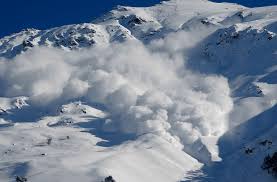
Avalanches can be triggered by an increase in precipitation, weakened snowpack, humans or animals, or earthquakes. Human-caused avalanches account for almost 90% of all occurrences. The Italian composer Alfredo Catalani (1854–1893) most likely knew this when he planned the final act of one of his most popular operas, La Wally (1892). The opera takes place in the Austrian Tyrol. Luigi Illica’s libretto is pretty typical: girl loves boy but father wants girl to marry different boy; girl and boy pledge undying love to each other; girl runs off to the mountains, boy chases her, calls for her, his voice sets off an avalanche, they both die. Oh wait, that last bit is a little different. But I guess that’s what happens when you belt out opera on top of some unstable snowpack.
Anne Ozorio wrote, “La Wally is gloriously theatrical. The heroine, Wally, is extraordinary. She’s an elemental, part woman, part nature spirit, who lives alone in the wilderness—surviving, one imagines, on sheer force of will. Compared to Wally, Carmen is a wimp. This story isn’t set in the high Alps for nothing. The mountains loom upwards towards the stratosphere. Extraordinary heroine, extraordinary setting: mountain peaks, frozen glaciers, crevasses, snowstorms and an avalanche. Catalani’s music isn’t sophisticated, but it’s gorgeously atmospheric. . . . The Andante that begins Act III marks a turning point. It’s moody, as if the weather is closing in. Catalani’s writing is so vivid that it becomes the drama. Wally’s heroic rescue mission is described in hard-driven figures. The avalanche music in Act IV could come straight out of Hollywood.”
La Wally is not staged as often as it could or should be. Erica Jeal wrote, “If an opera is neglected, there is usually a reason. In the case of Alfredo Catalani’s La Wally, it might be the difficulty of staging the final scene, in which the lead tenor is crushed by an avalanche. Or perhaps it is the lack of sympathetic characters: the heroine of the title is a hot-headed little madam who throws herself into a ravine at curtain-down. Nevertheless, Toscanini was so taken with her that he named his daughter Wally in tribute.” As Neil Kurtzman wrote, “[T]he opera would barely survive were it not for the soprano aria [“Ebben? Ne andrò lontana”]. . . . It occurs near the end of the 1st act. Wally has been ordered by her father to marry a baritone or leave home. Naturally, she chooses the latter and sings the aria.”
My classical music post for today is Alfredo Catalani’s La Wally: final scene.


Leave a Reply