

Thank you to everyone who subscribes to and supports the Daily Classical Music Post. This July, I will be sharing some favourite posts from the DCMP archives. A new theme will begin in August!
23 April 2016
“What use are the novels of Wordsworth when you’re making a mint on the money markets?”
That’s one of my favourite lines from Four Weddings and a Funeral, and of course today I thought about it because today is the anniversary of the death of the great English poet William Wordsworth (7 April 1770–23 April 1850).
Piano Sonata in D minor, Op. 13: I. Maestoso
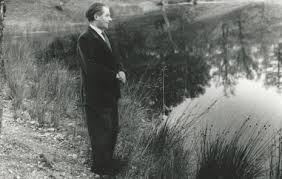
But I bet you didn’t know that there was a 20th-century Scottish composer named William Wordsworth (1908–1988)! He was a great-great-grandson of the poet’s brother Christopher. Most of his music is tonal and Romantic; however, he did experiment with 12-tone music as well. He wrote symphonies, vocal music, instrumental sonatas, and piano music. He has been mostly ignored by the classical music world; there are very few recordings of his works. All I’ve ever seen is recordings of a couple of symphonies and some of his piano music, and I’ve read that there is a recording of his cello sonata but I’ve never heard it.
Paul Conway said, “The Piano Sonata in D minor, Op.13 was begun in 1938 and completed the following year. The first of its three movements is the most substantial and wide ranging. A sombre and searching Maestoso introduction, in the lower registers of the keyboard conveys a sense of preparing for an epic journey. An intense, hushed figure marked parlando provides a foretaste of the ensuing Allegro deciso’s first subject, direct and spirited. Marked Allegretto, the secondary material is characterised by a poetic simplicity and delicacy; this mood is overshadowed by the arrival of the development section that reviews and elaborates the preceding material. The recapitulation is of similar proportions to the exposition, though the first subject has been tamed into a gentler, more flowing and airy incarnation of its former self. Dominating the coda is the haunting presence of the expressive parlando figure, before an incisive final Allegro provides a swift but firm conclusion to an elaborate and assured opening movement.”
My classical music post for today is the first movement of Wordsworth’s Piano Sonata in D minor, Op. 13: Maestoso–Allegro deciso.


Leave a Reply