

Thank you to everyone who subscribes to and supports the Daily Classical Music Post. This July, I will be sharing some favourite posts from the DCMP archives. A new theme will begin in August!
First published 23 November 2015
On 23 November 1834, Chrétien Urhan (viola) and the Orchestre de la Société des Concerts du Conservatoire conducted by Narcisse Girard gave the first performance of Hector Berlioz’s second symphony, Harold en Italie, Symphonie en quatre parties avec un alto principal, Op. 16.
BERLIOZ – Harold en Italie Op. 16 (Sir Colin DAVIS/Philarmonia Orchestra) – COMPLETE
Berlioz was commissioned by the great Niccolò Paganini to write a solo for viola. Berlioz had the idea of writing a solo “for the viola, but so combined with the orchestra as not to diminish the importance of the latter, feeling sure that Paganini’s incomparable execution would enable him to give the solo instrument all its due prominence.” Paganini was not happy when he saw how many rests there were in the viola part, and he was very disappointed in Berlioz’s effort. He didn’t think that the viola part was hard enough or as flashy as he would have liked. Berlioz later recalled that Paganini said, “This is not at all what I want. I am silent a great deal too long. I must be playing all the time.” Berlioz responded, “What you really want is a concerto for the viola, and you are the only man who can write it.”
However, in December 1838, Paganini finally heard a performance of Harold en Italie and was absolutely thrilled—so much so that he sent a letter of congratulations and 20,000 francs to Berlioz immediately. Paganini never actually performed the work, but the Stradivari viola that he had acquired that was the reason for commissioning the work in the first place has been lent to various soloists over the years.
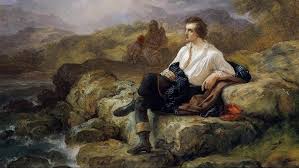
Berlioz took his inspiration for Harold en Italie from Lord Byron’s semi-autobiographical narrative poem Childe Harold’s Pilgrimage. Berlioz said, “I conceived the idea of writing a series of scenes for the orchestra, in which the viola should find itself mixed up, like a person more or less in action, always preserving his own individuality. The background I formed from my recollections of my wanderings in the Abruzzi, introducing the viola as a sort of melancholy dreamer, in the style of Byron’s Childe Harold. Hence the title of my symphony, Harold in Italy.” Each movement refers to various scenes that Harold encounters in the mountains:
Movement 1: Harold in the Mountains. Scenes of Melancholy, Happiness, and Joy.
Movement 2: March of the Pilgrims Singing Their Evening Prayer.
Movement 3: Serenade of an Abruzzi Montaineer to His Mistress.
Movement 4: Orgy of the Brigands. Recollections of the Preceding Scenes.
The viola is such a perfect instrument to depict the Byronic hero. Berlioz took a theme from an unfinished work based on Sir Walter Scott’s Rob Roy and used that for the principal theme representing Harold, and the rest of the symphony is pure magic, and pure Berlioz. I have to admit that I agree with several musicologists who feel that although Berlioz took the idea of Harold as the starting point, really the viola should be called “Hector,” as the connection with Harold is tenuous at best. It’s much more likely that the events in the mountains are from Berlioz’s own experiences. But Child Harold’s Pilgrimage was very popular at the time, so it was pretty shrewd of Berlioz to capitalize on that.
Harold en Italie is one of my favourite works ever; it is probably the only piece of music that makes me wish that I played the viola instead of the flute. I have never been fortunate enough to play in an orchestra that was big enough to contemplate performing it.
My classical music post for today is Hector Berlioz’s Harold en Italie.


Leave a Reply