

Thank you to everyone who subscribes to and supports the Daily Classical Music Post. This July, I will be sharing some favourite posts from the DCMP archives. A new theme will begin in August!
First published 6 November 2013
November is Opera Month on the Daily Classical Music Post!
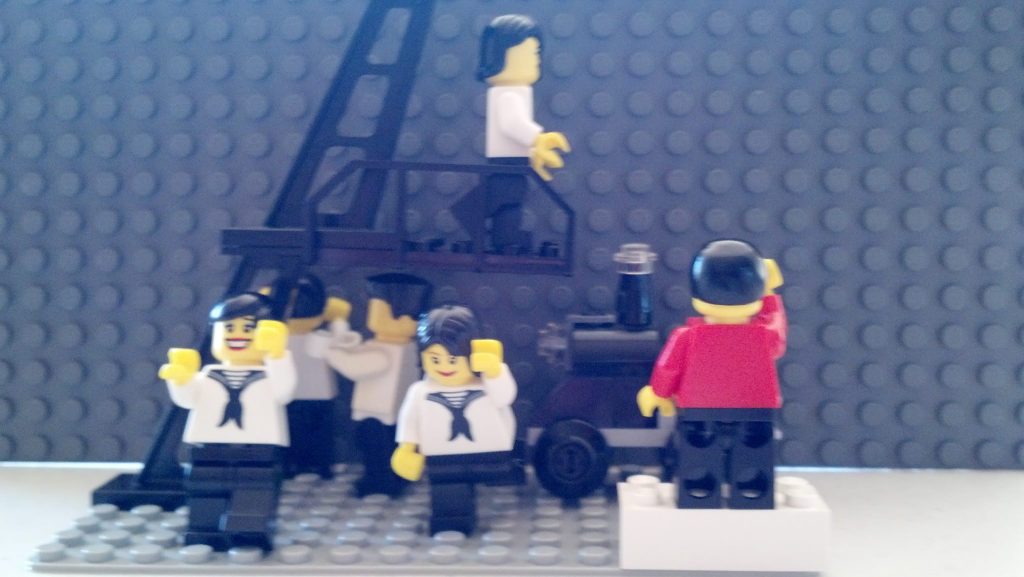
Einstein On The Beach – Act 1. Scene 1. Train – comp. Philip Glass
Philip Glass – Einstein on the Beach: Knee play 1, Train
The American composer Philip Glass’s opera Einstein on the Beach does not have a plot or a libretto. The four acts are interspersed with “Knee Plays” that act as a sort of introduction to each act as well as giving time to change from one elaborate scene to the next. The entire opera is about five hours long and is meant to be performed without an intermission. Audiences can “make their own intermissions” if they wish, although I’d be worried that I’d miss something important!
Glass’s minimalist music for the opera, composed from 1975 to 1976, uses numbers and solfège syllables instead of a standard text, although there are some excerpts from poetry as well. Glass collaborated with Robert Wilson, the American avant-garde theatre director, to create a series of different moods, scenes, dances, and general ideas. Glass has always been attracted to the notion of time and space in music, and this works extremely well in Einstein on the Beach. The choreography, by Lucinda Child, enhances the score and stage sets. It all creates a marvelous impression of time and space in which everything is relative . . . a fitting tribute to the man who discovered the theory of relativity.
As Mark Swed said in a review of the opera, “The form of the work, which lasted a little over four hours Saturday and was performed without a break, is quite simple, even banal. A series of Einstein-inspired images are transformed over four acts, as the opera moves through the span of Einstein’s life, from steam engines to space travel. A train, for some reason, becomes a building. Everywhere there are Einsteins. A solo violinist is dressed like the scientist. So is the chorus and so are many on stage.”
I have shared two links today. The first is a recording of the first act, “Train,” accompanied by a still of the stage at the end of the act. The second is an excerpt from a live production, and this shows at least some of the wonderful choreography and overall look and feel of the opera. But this is a work that absolutely should be seen live; words, pictures, even a recording cannot portray this extraordinary work, one that is recognized as changing opera forever.
My classical music post for today is Philip Glass’s “Train” from Einstein on the Beach.


Leave a Reply