

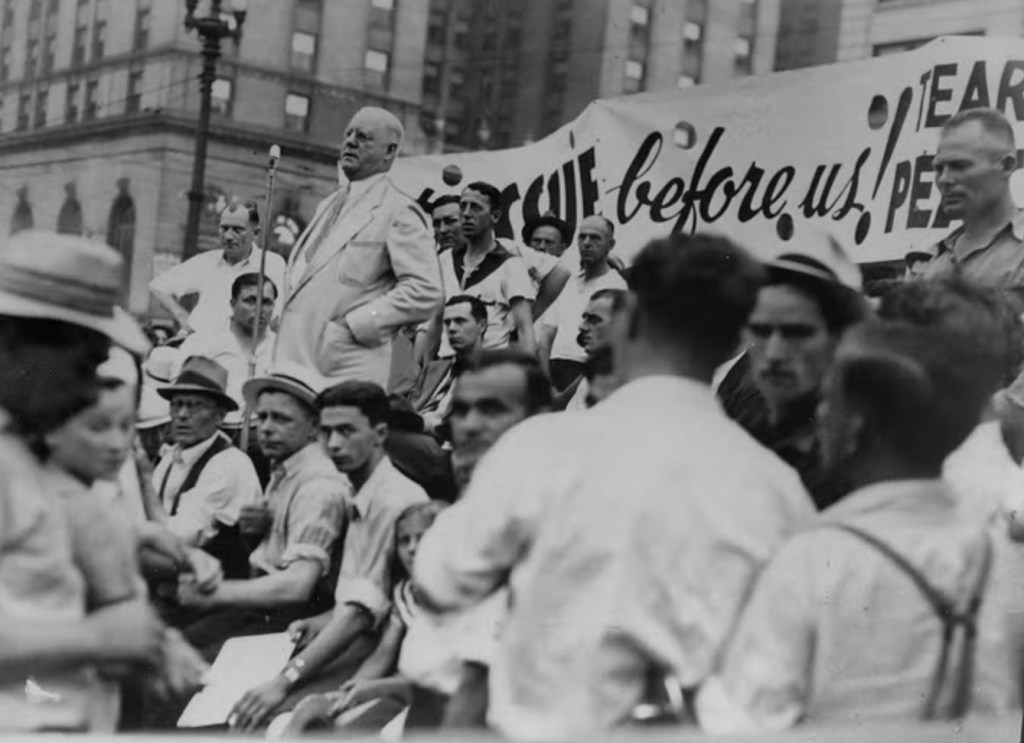
The first day of May is International Workers’ Day. Workers and the labour movements are celebrated worldwide on this day. This May, the Daily Classical Music Post will honour and commemorate the struggles, achievements, rights, and gains of workers through music.
Broadway’s First Cast Recording, THE CRADLE WILL ROCK
The year 1937 was an important one in the history of unions and the labour movement in the United States of America. The Congress of Industrial Organization grew significantly, and major strikes in several industries, including steel and automotive, led to union recognition and better working conditions at companies including General Motors. The Great Depression helped fuel activism and unrest.
The American composer Marc Blitzstein (1905–1964) came to prominence in 1937 when his pro-union opera The Cradle Will Rock was shut down by the Works Progress Administration. The website marc-blitzstein.org says, “Marc Blitzstein’s biggest and best-remembered hit, The Cradle Will Rock was a left-wing dream when it opened in 1937, in the middle of the Great Depression. Both an attack on wealth and the political power it brings, and a paean to labor and poor people struggling to get by, the show got a huge publicity boost from its legendary opening. The Federal Theatre production had been in rehearsal for weeks and was almost ready to go when the Works Progress Administration, the federal agency that oversaw the Federal Theatre, abruptly canceled the production and sent armed guards to keep any costumes or sets from being removed from the theater. Furthermore, Actors’ Equity barred cast members from performing the show onstage.” Private funding was secured, and this enabled performances to go ahead in a new venue.
The Cradle Will Rock is set in Steeltown, USA, and has a colourful cast of characters, all aptly named, including Moll, Harry Druggist, Mr. Mister, Reverend Salvation, Editor Daily, Dauber, Yasha, and Larry Foreman. The director was a young Orson Welles and John Houseman was the producer. Howard Pollack noted that Blitzstein “objected to the terms operetta and musical comedy and deliberately called the work an opera.” There are ten scenes in the opera. Blitzstein planned it to be performed without an intermission, although an early production did include a short break after scene six. The full dress rehearsal took place in June 1937; Blitzstein wrote, “At any rate, on the chance that we might never really open, Welles and Houseman invited to our final dress rehearsal the most elite New York audience imaginable. That rehearsal was the first and the last time the work has ever been fully performed exactly as I wrote it. It seemed a success.”
My classical music post for today is Marc Blitzstein’s The Cradle Will Rock.


Leave a Reply