

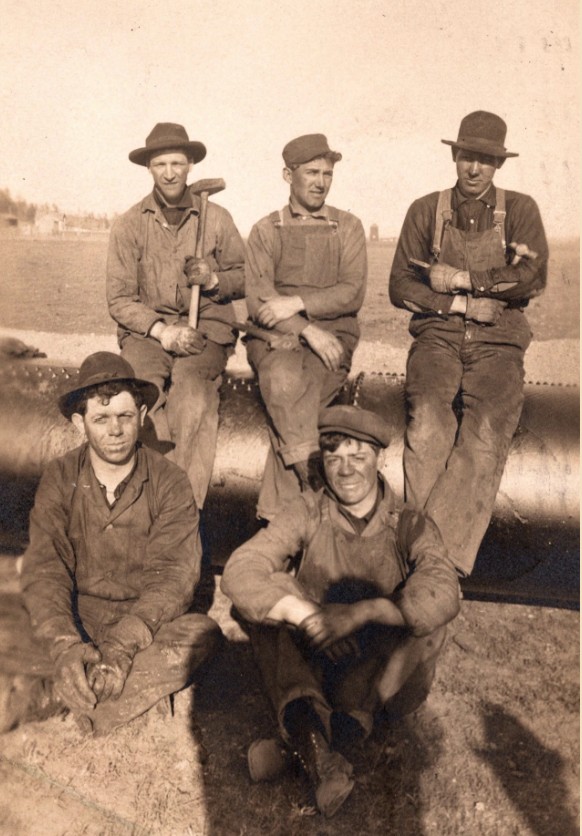
The first day of May is International Workers’ Day. Workers and the labour movements are celebrated worldwide on this day. This May, the Daily Classical Music Post will honour and commemorate the struggles, achievements, rights, and gains of workers through music.
Act I Scene 1: When I woke up this morning… (Workmen)
The history of the American architect Frank Lloyd Wright’s “shining brow” on a hill in Wisconsin is fairly well known: Taliesin, Welsh for “shining brow,” was built beginning in 1911 following Wright’s concept of organic architecture. The first iteration was partially destroyed in 1914 by Wright’s chef Julian Carlton, who set fire to the living quarters after he murdered Wright’s companion, Mamah Cheney, and six other people. The three iterations of Taliesin were built by draftsmen and construction workers, all of whom were apprentices, learning Wright’s techniques and ideas on the go.
The workers who built Taliesin lived on the property. Wright called them “the fingers of my hand.” The idea was for everyone to live together, work together, and learn together. Everyone had to do everything: actual construction of the building, cooking, maintenance, gardening, and other daily tasks. Many had little to no experience; this suited Wright, as he could impose his values on everyone living and working there. There were rumours of exploitation, but for the most part, the workers enjoyed their time there, if contemporary reports are to be trusted, anyway.
In 1989, Madison Opera asked the American composer Daron Hagen (born 1961) to write an opera about Frank Lloyd Wright. The libretto for the opera, Shining Brow (1993), was written by the Irish poet Paul Muldoon. Throughout the composition of Shining Brow, Hagen asked Leonard Bernstein for guidance and advice, and Hagen dedicated the opera to Bernstein, who died before it was finished.
Shining Brow, a “number opera,” contains a prologue and two acts. The opera begins with Wright meeting Mamah while building a house for her and her husband Edwin Cheney, and then covers their affair as well as the building and destruction of Taliesin and Mamah’s murder. Act I has three scenes, with arias, ariettas, interludes, and other numbers. Act II begins with a prelude and has dialogues, a couple of sextets, orations, arias, and ariettas. The fire takes place halfway through Act II. In addition to Wright and his companion, there are townspeople, reporters, draftsmen, servants, and workmen, and there is a barbershop quartet in Act II.
At the end of Act I Scene 1, a group of workmen sing about their lives working on the Cheney’s house in Chicago. In “When I woke up this morning . . .,” the workmen discuss waking up still wearing their work clothes, drinking gin in order to get the day going, working until the lunchtime whistle blows, having lunch, and doing what construction workers always do, flirt with women walking by the site. It is a lovely, gentle song, and is just one of the highlights of this acclaimed opera. Uncle Dave Lewis wrote, “Shining Brow is not made up of wall-to-wall singing, as so many post-modern operas are. . . . [It] is a compelling, substantive, and strong entry into the canon of American opera.”
My classical music post for today is Daron Hagen’s Shining Brow: “When I woke up this morning . . .”


Leave a Reply