

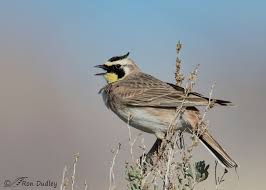
A is for April, and it’s also for Animals! This April, the Daily Classical Music Post explores music celebrating the animal kingdom.
Galina Vishnevskaya Sings Mikhail Glinka’s “The Lark”
“The music soars within the little lark, / And the lark soars.”—Elizabeth Barrett Browning
The Russian composer Mikhail Glinka (1804–1857) is considered to be the father of Russian nationalist classical music, mainly because he influenced so many 19th-century Russian composers, in particular Mily Balakirev, César Cui, Modest Mussorgsky, Nikolai Rimsky-Korsakov, and Alexander Borodin (known as “The Five”). Glinka believed that his mission in life was to compose in a Russian style and help to create a Russian nationalistic form of music. His operas and ballets are the best examples of this.
Glinka composed his song cycle A Farewell to Saint Petersburg in 1840. The songs were settings of poems by the Russian author Nestor V. Kukolnik. Elise Renée Read Anderson said, “Other than the text’s author, A Farewell to St. Petersburg lacks an overtly integrative theme and consequently the songs are rarely performed consecutively. However, the cycle does contain a number of Glinka’s better-known pieces, such as ‘Жаворонок’ (The Lark). . . . Kukolnik later recalled that he fitted words to a melody Glinka had already written to create this art song.”
Wendelin Bitzan said, “The Lark is one of the most popular Russian songs of the Romantic era, composed by the founder of the Russian nationalist school, Mikhail Glinka. His fellow countryman, Mili Balakirev, took this simple, melancholy air as the basis for a highly virtuosic piano transcription à la Liszt.” Balakirev’s piano version, which he described as a “plain and entirely uncomplicated presentation of Glinka’s beloved melody,” was very well received. The original song for voice and piano is not as virtuosic or as melancholy as Balakirev’s transcription, and is perhaps more interesting because of that.
The Lark is a two-verse strophic song. The lovely and simple melody is folk-like, with grace notes in the right hand of the piano representing a lark singing and jumping from branch to branch. Anderson summarized the text: “The lark is singing louder and louder. The singer is unseen, and the wind carries the song. She for who it is for, she will know who it is from. Pour on, my hope, someone remembers me and is sighing.”
My classical music post for today is Mikhail Glinka’s The Lark.


Leave a Reply