

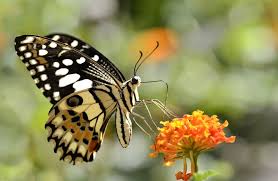
A is for April, and it’s also for Animals! This April, the Daily Classical Music Post explores music celebrating the animal kingdom.
Edvard Grieg plays his ‘Butterfly’ (1906)
“Beautiful and graceful, butterflies lift our spirits with their loveliness and lyric flight.”—Gloria B. Schlaepfer
The Norwegian composer Edvard Grieg (1843–1907) was a leading Romantic composer. He often incorporated Norwegian folk music in his works. There are many music schools and other cultural institutions in Norway dedicated to his legacy. He composed orchestral music, incidental music, and piano music, as well as three violin sonatas and a cello sonata.
Grieg composed his Lyric Pieces, Op. 43, for piano from 1867 to 1901. The 66 pieces in this collection were published in 10 volumes, and these are among his most well-known and popular works. Book III, dedicated to the German musician Isidor Seiss, was composed most likely in 1886. There are six short works in Book III. The first, Sommerfugl (Butterfly), is a delightful Allegro grazioso.
Einar Steen-Nøkleberg said, “The extraordinary popularity of the first two books of Lyric Pieces (opp. 12 and 38) was interpreted differently by Grieg and his publisher. Whereas Grieg would have liked to call his third book ‘Spring Songs,’ so as to counteract the impression of a serial publication, the publisher recommended keeping the Lyric Pieces ‘brand name’—and he got what he wanted. Huge and long-lasting success quickly followed: some 20 years later the publisher proudly reported to Grieg that his Lyric Pieces, especially opp. 12 and 43, were selling ‘like hot cakes’.”
Christopher Headington said, “Grieg’s Lyric pieces belong in a tradition of short pianistic essays and tone-poems, of which famous earlier examples include Beethoven’s Bagatelles, Schubert’s Moments musicaux, Mendelssohn’s Songs without words and Schumann’s Kinderszenen. There are nearly 70 in all and they are brimful of imagination and poetry as well as beautifully written for the piano.”
My classical music post for today is Edvard Grieg’s Lyric Pieces: vol. III, no. 1, Sommerfugl.


Leave a Reply