

A is for April, and it’s also for Animals! This April, the Daily Classical Music Post explores music celebrating the animal kingdom.
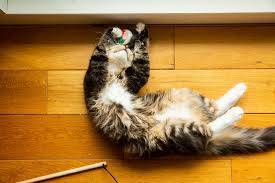
Britten: Rejoice in the Lamb, Op. 30: For I will consider my cat Jeoffrey
“There are two means of refuge from the miseries of life: music and cats.”—Albert Schweitzer
The English composer Benjamin Britten (1913–1976) wrote orchestral music and opera, but his choral compositions are among his most popular and often-performed. Paul Spicer said, “A sizeable proportion of his choral music is easily within the reach of a good ordinary choir, another part is well within the grasp of a reasonable church choir, and there is, of course, all the music he wrote specifically for children. . . . The range of this output and the frequency of performance of the better-known works underline Britten’s ubiquity in the world of choral singing, not just in the English-speaking community but far beyond.”
Britten composed Rejoice in the Lamb in 1943. The cantata, scored for SATB choir, SATB soloists, and organ, was set to a text by the 18th-century poet Christopher Smart. Smart most likely wrote the poem Jubilate Agno, which describes the worship of God by different things including animals, letters of the alphabet, and musical instruments, while he was in a mental asylum, although this has been disputed. The words are fanciful, with bizarre imagery and extraordinary drama. Britten chose 48 lines of Smart’s poem for the cantata, including those on two animals, a cat and a mouse.
Oliver Soden said, “The poem hovers between the absurd and the sublime, simultaneously a magnificat and an asylum journal. For company and solace during his confinement Smart seems only to have had his cat, the immortal Jeoffry, to whom he devoted an enchanting seventy-four lines of rapturous description: ‘For I will consider my cat Jeoffry’. . . . ‘I am afraid I have gone ahead and used a bit about the cat Jeffrey’ Britten told Hussey, never entirely grasping the idiosyncratic spelling of the cat’s name (he had to scratch out a superfluous e from the manuscript score). ‘He is such a nice cat.’ And so he is, memorably described by Smart as ‘surpassing in beauty’, a ‘mixture of gravity and waggery’ who can tread ‘to all the measures upon the musick’, his tongue ‘exceeding pure so that it has in purity what it wants in musick’. Britten gave the Jeoffry section to a treble, and the organ frolics around the vocal line in E-major loops, a scatter of semiquaver pawprints.”
My classical music post for today is Benjamin Britten’s Rejoice in the Lamb: “For I Will Consider My Cat Jeoffrey.”


Leave a Reply