

A is for April, and it’s also for Animals! This April, the Daily Classical Music Post explores music celebrating the animal kingdom.
Cantus arcticus, Op. 61, “Concerto for Birds and Orchestra”: I. The Bog
“A bird does not sing because it has an answer, it sings because it has a song.”—Chinese Proverb
The Finnish composer Einojuhani Rautavaara (1928–2016) wrote in almost every genre: orchestral music, opera, chamber music, vocal music. His early works were in a serialist style, but his later works, dating from the beginning of the 1970s, were more mystical and neo-romantic. He said, “The modernism of that time, […] that is the serialism in music, which I had experimented with, […] was not a road for me to follow.” The 1970s ended up being his most productive period.
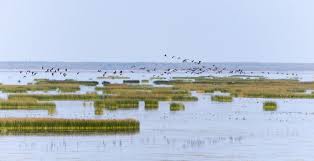
Cantus Arcticus, also known as Concerto for Birds and Orchestra, was composed near the beginning of this period, in 1972. The instrumentation calls for symphony orchestra and two recorded tapes of birdsong. It is more tonal than much of Rautavaara’s music, which partly explains its popularity. Maureen Buja said, “[Rautavaara] chose to focus on the bird life of the region. . . . Finland is home to some 480 confirmed species of bird. Rautavaara explored the marshes of northern Finland and made his own recordings, selecting birds of the Arctic for his sound world. Rautavaara’s instructions to the orchestra, written in the performance notes in the work, were ‘Think of autumn and of Tchaikovsky.’ In the autumn, the birds gather to fly south and in the increasing darkness of the north, cranes, swans gather, preparing for their great migration. Recordings of birds of the bogs of Liminka, in northern Finland, are used in the first movement. This wetlands area is a home to many different kinds of birds.”
David Wright said, “This sound world is unique and totally absorbing. When a composer can successfully produce a pictorial realisation in an aural treatise he has made a great achievement. The cold and the migrating swans are captured with great imagination and the use of aleatoric passages is relevant in this rather special piece. It is both evocative and communicative and has a documentary feel.”
My classical music post for today is Einojuhani Rautavaara’s Cantus Arcticus: I. The Bog.


Leave a Reply