

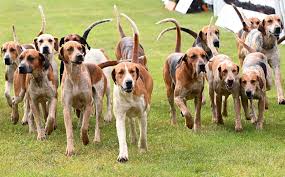
A is for April, and it’s also for Animals! This April, the Daily Classical Music Post explores music celebrating the animal kingdom.
Leopold Mozart (1719 – 1787) : Sinfonia di Caccia (Hunting Symphony) (1756)
“When there are dogs and music, people have a good time.”—Emmylou Harris
Leopold Mozart (1719–1787) was a fascinating character, not just because he was the father of Wolfgang Amadeus. Leopold composed some very interesting and unusual works (he was particularly known for his “naturalistic” style), including a symphony for chamber orchestra and toy instruments (Cassation in G Major, also known as the Toy Symphony). But his Jagdsinfonie, composed in 1750, is an attempt to recreate the sounds of a hunt, and it really succeeds.
This three-movement work was also known as the Sinfonia da Caccia for 4 Horns and Strings. The instrumentation calls for hunting horns, strings, and gunshots, as well as barking dogs. Leopold was described by James Reel as “a solid composer, though no innovator,” and although it is true that there were composers before him who aimed to recreate the sights and sounds of country life, there is something particularly charming and special about the Jagdsinfonie. His humour and wit is apparent throughout the piece.
Francesc Serrcanta said, “The first movement, allegro, uses the horns loudly in the usual way they sound during hunts. It introduces shotgun shots imitated by percussion and sounds of the pack of dogs.” Although most performances use recordings of dogs, there have been several more recent performances with live dogs on stage, which adds a certain hilarity to the proceedings (PSO Hunting Symphony for Hounds, Horns and Guns).
My classical music post for today is Leopold Mozart’s Jagdsinfonie.


Leave a Reply