

William Cosgrove famously said, “Music hath charms to soothe a savage breast.” At this pivotal moment in the world’s history, the Daily Classical Music Post explores music by composers who ran afoul of tyrants and dictators and who as a result were banned, imprisoned, or executed. We’ll also listen to some music by composers who criticized the regime under which they worked but managed to fool the ruler.
Marcel Tyberg – Piano Trio in F major (1935-36)
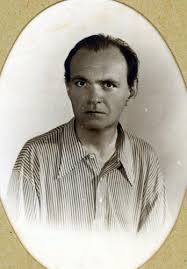
The Austrian composer Marcel Tyberg (1893–1944) was born into a family of classical musicians. He had many different jobs in addition to composing classical music in a late Romantic style, including teaching harmony, playing the organ in churches, conducting, and—using the name Till Bergmar—writing popular dance music for resorts. Marion Schiffler said that Tyberg lived in “indescribable poverty and supported himself and his mother only through lessons.”
In his 20s, after the death of his father, he moved with his mother to northern Italy (today part of Croatia), where he was living when Nazi forces invaded and occupied the region. Nazi regulations required that everyone register and give an account of their family history. Although the Tyberg family was Roman Catholic, Tyberg’s mother indicated on the forms that one of her great-grandfathers had been Jewish. Even at that far remove (he was only 1/16th Jewish), Tyberg was considered by the Nazis to be “undesirable,” and so he was arrested. He was sent first to the concentration camp at San Sabba and then to Auschwitz, where he was murdered. (His mother died of natural causes before she could be arrested and deported.)
Tyberg anticipated that he would be arrested and so he gave manuscripts of his classical compositions to a friend, Milan Mihich. Although the Mihich family fled to Buffalo, New York, when the Yugoslavian communists took control, they made sure to keep Tyberg’s music with them and safe. Zachary Redler said, “In the Summer of 2005, Marcel Tyberg’s oeuvre, once remembered only in the hearts and minds of friends, emerged from Enrico Mihich’s Buffalo basement to be reintroduced to the musical community. . . . Marcel Tyberg [is] among the most recently rediscovered composers whose lives and careers were cut short by World War II.”
In the late 1980s, Enrico Mihich approached JoAnn Falletta, conductor of the Buffalo Philharmonic, asking her to help get Tyberg’s music published and performed. Falletta was moved and impressed by the music and agreed to help. The Buffalo Philharmonic gave the premiere of Tyberg’s Third Symphony (his final completed work, not performed in his lifetime) in 2008, and then they were invited to the town where he had lived in what is now Croatia and performed his Second Symphony. Falletta said, “It was very moving to be in the theater where he gave concerts, heard concerts, and where he lived; and to visit the cemetery where his name is listed on the list of Jewish people who perished from that town. . . . I am very passionate about [Tyberg’s] music. And for me, it is a reparation. We can never take away one moment of horror, not one moment of pain. But for someone like Tyberg, we can do for him the thing that was dearest to him, and that was to have his music heard. That would have been his life’s desire.”
My classical music post for today is Marcel Tyberg’s Piano Trio in F major.


Leave a Reply