

William Cosgrove famously said, “Music hath charms to soothe a savage breast.” At this pivotal moment in the world’s history, the Daily Classical Music Post explores music by composers who ran afoul of tyrants and dictators and who as a result were banned, imprisoned, or executed. We’ll also listen to some music by composers who criticized the regime under which they worked but managed to fool the ruler.
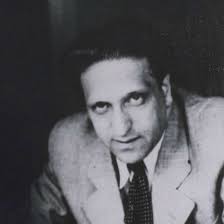
The Czech composer Pavel Haas (1899–1944) was particularly known for his song cycles and string quartets. He was the final student of Leoš Janáček. Haas was extremely critical of his own compositions; he wrote over 50 works in his short life, but he only gave 18 of those opus numbers. His output included symphonic works, choral works, songs, chamber music, and film scores.
In 1941, Haas was deported to Theresianstadt. Other composers there at the time included Viktor Ullmann, Hans Krása, and Gideon Klein. Haas was very depressed when he arrived, and Klein convinced him to compose to try to get through the devastating experiences. Haas’ Study for String Orchestra, one of eight pieces he composed in the camp, premiered there.
In 1944, the Nazi propaganda machine produced a film, Der Führer schenkt den Juden eine Stadt (The Fuhrer Gives the Jews a City), in an attempt to counter reports of persecution of Jews and make the world think that everyone was being treated really well in Theresienstadt. There is a scene in the film of a group of children singing an opera by Krása, and Haas can be seen taking a bow at the end of a performance of the Study for String Orchestra. After filming was finished, the Nazis transported over 18,000 people, including Haas and all of the children seen in the performance of the opera, to Auschwitz-Birkenau, where they were murdered upon arrival. The Czech conductor Karel Ančerl, who had conducted the premiere of Haas’ Study for String Orchestra, was standing next to Haas in the Auschwitz selection line and barely managed to avoid the gas chamber.
Benjamin Pesetsky said, “Pavel Haas’s Study for Strings is filled with lively textures with folksy overlays, all while carrying alternating airs of exuberance and introspection. It is hard to know what to expect music written directly in the midst of the Holocaust to sound like, but here it is—Haas was a Czech Jew interned at Theresienstadt where he composed and premiered it. The score was lost after he was sent to his death at Auschwitz-Birkenau, but the conductor Karel Ančerl survived and helped reconstruct it from orchestral parts found when Theresienstadt was liberated.” Tim Ashley said, “A one-movement work of considerable power, it flanks a harrowing central adagio with tangled fugues and jagged allegros full of angry cross rhythms. Its quality is undeniable, and while we should never forget the circumstances in which it was written, it also seems right that Haas’s music should be placed alongside works by both his teacher Janáček and his exiled contemporary Martinů.”
My classical music post for today is Pavel Haas’ Study for String Orchestra.


Leave a Reply