

Christmas is so commercialized and mostly about consumerism, but at its root it is about birth, peace, joy, love, light, and goodwill. This December, the Daily Classical Music Post will look at music that celebrates birth, rebirth and resurrection, peace, hope, and joy.
Resurrection: Act: Song of the New Resurrection
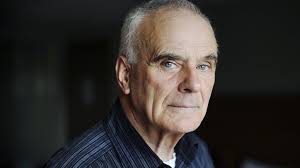
The English composer Peter Maxwell Davies (1934–2016) was never one to mince his words—or his music. He said about his opera Resurrection that it “was conceived when I was a post-graduate student at Princeton University in 1963. Although the text was not complete until 1983 and the music until 1987, in all essentials the work remained true to the initial conception—the pressure of society upon the individual to ‘conform’ had become even more intense meanwhile.” This unusual opera has a silent character (basically a puppet) in the lead role, and included in the orchestration is a backstage brass band and a rock band. There are similarities in the text to writings of James Joyce and Thomas Mann, as well as to the works of Kurt Weill.
K. Robert Schwarz said, “Take the orgiastic sexuality, formalist complexity and delirious excess of a Peter Greenaway film, cross it with the caustic political commentary of a Bertolt Brecht play, and you will have a point of reference from which to approach ‘Resurrection,’ an opera by the English composer Peter Maxwell Davies, now resident in Scotland. Begun in the early 1960’s but not performed until 1987, ‘Resurrection,’ with music and libretto by Mr. Davies, is one of the fiercest works of social criticism ever to come from the pen of a classical composer.”
The opera is a veritable feast of musical styles. There are typical Max musical lines that somehow co-exist (or perhaps don’t, but that’s probably the point) with parodies of Bach chorales, Edwardian ballads, and 1960s rock. He also incorporated four plainsong melodies—two for the Nativity, one for the Massacre of the Innocents, and one for the Resurrection—“upon each of which, as well as quasi-serial ‘sets’ huge transformation systems and magic square are built, hopefully lending unifying rhythmic, motivic, thematic and even harmonic elements to the disparate modus operandi” (quote from his notes accompanying the score).
Resurrection is a musical, it is an opera, it is a smorgasbord of music history, and it is scandalous and unsettling. It is prime Max, even more out there than Eight Songs for a Mad King, and it is extraordinary.
My classical music post for today is Peter Maxwell Davies’ Resurrection: “Act: Song of the New Resurrection.”


Leave a Reply