

Christmas is so commercialized and mostly about consumerism, but at its root it is about birth, peace, joy, love, light, and goodwill. This December, the Daily Classical Music Post will look at music that celebrates birth, rebirth and resurrection, peace, hope, and joy.
Grechaninov, A Mercy of Peace, Op.44 (Гречанинов, Милость мира, Соч.44)
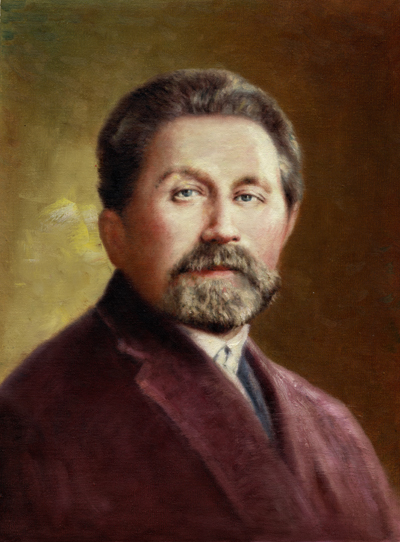
The Russian Romantic composer Alexander Grechaninov (1864–1956) studied with Sergei Taneyev, Anton Arensky, and Nikolai Rimsky-Korsakov, and the latter’s influence in particular is evident in his early works. The tsar recognized Grechaninov’s talent by giving him an annual pension; obviously, this was stopped after the Russian Revolution, and within a few years Grechaninov decided to leave the USSR. He first went to France but then settled in the United States just before the beginning of World War II.
Grechaninov’s large (over 1,000 works) output included five symphonies, four string quartets, other chamber music, sonatas for several instruments including balalaika, operas, song cycles, and choral music. His religious works, particularly for choir, were very popular. He did not find it difficult to compose even after leaving Russia; he said, “Some Russian writers abroad complain that, being cut off from their native soil, they cannot create. I didn’t have that. Conversely, I have worked here a lot and in my compositions written here, it seems that my Russian nature is even more felt than in the previous ones written at home.”
In honour of the 160th anniversary of Grechaninov’s birth, his ancestor Vladimir Grechaninov directed a short (40-minute) film about Alexander. The film explores the composer’s religious faith and music that he wrote for the Russian Orthodox Church. Georg Predota said, “The musical treasures of Russian folk song provided the inspiration for his melodic inspiration, while the traditional chants of the Russian Orthodox Church played an important part in establishing his spiritual identity. Grechaninov refused to make concessions to modern ideas of harmony, but gradually derived and evolved his harmonic language from the so-called ‘Russian National School’ that established itself towards the turn of the century.” Blair Sanderson said of Grechaninov’s sacred music, “The monumental harmonies of this music are chanted a cappella, and the richness of the textures is reinforced by the low notes of the basses, which give the sound a deep resonance and special warmth.”
My classical music post for today is Alexander Grechaninov’s A Mercy of Peace.


Leave a Reply