

Christmas is so commercialized and mostly about consumerism, but at its root it is about birth, peace, joy, love, light, and goodwill. This December, the Daily Classical Music Post will look at music that celebrates birth, rebirth and resurrection, peace, hope, and joy.
Claudio Santoro: Symphony no. 4, São Paulo Symphony Orchestra, John Neschling
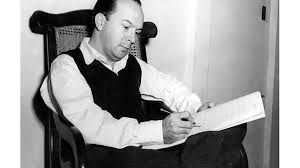
The Brazilian composer Cláudio Santoro (1919–1989) studied with many famous musicians, including Nadia Boulanger in Paris. He won several awards for composition, including the 1948 Lili Boulanger Memorial Fund prize, which was judged by, among others, Igor Stravinsky and Aaron Copland. James Leonard said, “Claudio Santoro is not quite Brazil’s best composer of European-style ‘classical’ music—there is, after all, Heitor Villa-Lobos—but he is a very close second.”
Santoro’s early works were serialist in style, but in the 1950s he began to compose in a more nationalist style. His Symphony No. 4 (1953–1954), one of his most accessible and influential works, is representative of this shift. This symphony, known as the ‘Sinfonia da Paz’, shows some influences of Copland, Howard Hanson, and Roy Harris, but Santoro reveals in his melodies and rhythms that he is much more inventive than his North American contemporaries. Jean-Yves Duperron said, “Santoro was a much more cosmopolitan sounding composer than Copland.”
The final movement of the Sinfonia da Paz is the “Song of the People”; Santoro said, “I wrote the finale as if it were a joyful carnival parade, with people waving flags and banners . . . that was the idea, which is why it uses typical Brazilian percussion, redolent of Rio de Janeiro, where I imagined people on the [Avenida] Rio Branco calling for peace.” David Hurwitz said in a review of Symphony No. 4, “Happily, the text never sinks to the depth of the Socialist Realist junk that Shostakovich used in his Second and Third Symphonies; instead, the whole piece has a breezy appeal that’s quite charming. The slow movement is particularly beautiful.”
My classical music post for today is Cláudio Santoro’s Symphony No. 4, ‘Sinfonia da Paz’.


Leave a Reply