

Christmas is so commercialized and mostly about consumerism, but at its root it is about birth, peace, joy, love, light, and goodwill. This December, the Daily Classical Music Post will look at music that celebrates birth, rebirth and resurrection, peace, hope, and joy.
Andrzej Panufnik: A Procession for Peace
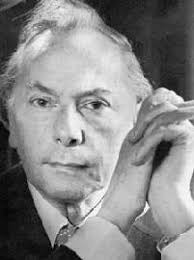
The Polish composer and conductor Andrzej Panufnik (1914–1991) defected to the United Kingdom in the 1950s after becoming frustrated by the restrictive regime in Poland, and he became a British citizen in the early 1960s. He never lost his love for the country of his birth; his music often incorporated Polish folk tunes and styles. He invented a geometrical and symmetrical musical language and his compositions are often lushly and colourfully orchestrated.
A Procession for Peace, for orchestra, was composed in 1982–1983, to a commission by Lord Birkett and the Greater London Council as part of the 1983 Year of Peace celebtrations. Peace was a very important concept for Panufnik, mainly because of his experiences in Poland during the Nazi era and then the Stalin era. He had earlier composed the Symphony of Peace (withdrawn from performance) as well as the Invocation for Peace and Universal Prayer. A Polish site dedicated to Panufnik and his music said, “The composer bemoaned the fact that communism distorted the idea of peace in the world so much and in his works tried to express it in a manner that would be free of any ideological overtones.”
Panufnik wrote in his programme notes, “This work is a kind of symphonic prelude, written on two planes: the wind instruments and strings play a hymn-like chorale in the metre of 3/4, while the beat of the drums and the timpani reflect the character of a very slow, solemn march in the metre of 2/4. As this composition was designed for an open-air concert, I was imagining myself as a painter, using a large brush on a huge canvas. After the initial timpani roll, the muted brass with drums start extremely softly, like a very slowly approaching procession heard from a great distance. Then the brass gives way to woodwinds, and the woodwinds to strings. This invocation gradually becomes more and more intense, and louder, as the procession draws nearer—until the last bars, where the whole orchestra together express with their utmost power an impassioned call for Peace. I composed this short orchestral work having no affiliation to any peace organisation nor to any political party. I furnished it with this dedication: To peace-loving people of every race and religion, of every political and philosophical creed.”
My classical music post for today is Andrzej Panufnik’s A Procession for Peace.


Leave a Reply