

Politics can shape music just as music can express political ideas. This October, the Daily Classical Music Post will look at some of the music written as a protest, commemoration, or statement of political beliefs.
William Byrd. Why do I use my paper, ink and pen.
The English Renaissance composer William Byrd (1540–1623) was a Catholic recusant, but he managed somehow to keep his beliefs hidden, for the most part, although he was on recusancy lists. His membership in the Chapel Royal was suspended for a while and restrictions were placed on his movements. He somehow avoided arrest, although he did not stop composing sacred music for his circle of Catholic friends. Although his music wasn’t formally banned, he was to some extent forgotten for 300 years until the music that he kept hidden was “rediscovered.”
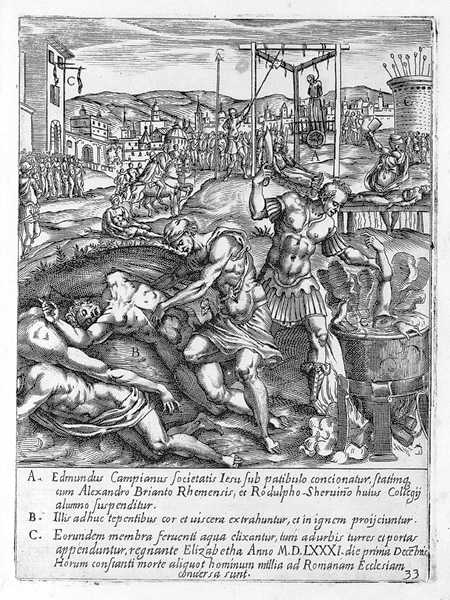
It was really difficult, and sometimes actually fatal, to be a Catholic in England at that time. In 1581, Edmund Campion was arrested by priest hunters (yes, there were people who had this job), accused of treason because he was practicing and encouraging Catholicism in hiding, and sentenced to death. Henry Walpole was present at the execution and wrote a poem, “Why do I use my paper, inke, and penne?” as a commemoration. Interestingly, Walpole followed Campion into the Catholic priesthood and then, sadly, execution as well. Not long after, Byrd set part of this poem for consort and voice.
Matthew J. Curtis said, “The words are moving because Catholics were forced to use manuscript to disseminate works (printing presses being difficult to buy, conceal and feed; paper being bulky and expensive). This poem, written by Henry Walpole within a month of Campion’s death, was printed in the Alfield, A true reporte of the death & martyrdome of M. Campion Iesuite and preiste; the press of Richard Verstegan was seized. The manuscript version was disseminated widely, and set to music by William Byrd, probably within a few months, although the printed version of Byrd’s setting was not published till 1588, without Campion’s name being included (for obvious reasons, in Protestant England).”
Byrd’s choice to set this poem was a bold one. The publisher of the poem had actually met the same fate as Campion. It definitely helped that Queen Elizabeth I favoured Byrd. He also didn’t set the most controversial verses of the poem, which was probably just as well. (You can read the entire poem here: Walpole “Upon the death of M Edmund Campion”). However, it is most likely that this piece was performed only for audiences that were Catholic or at least accepting of Catholics.
My classical music post for today is William Byrd’s “Why do I use my paper, ink, and pen?”


Leave a Reply