

Composers dedicate pieces of music to others for many reasons. Sometimes it is a way to thank or honour a mentor or patron. Sometimes it is to express friendship or love interest. Maybe the composer wants to remember someone close to them who has died. And maybe it’s just to celebrate a favourite place or event. This September, the Daily Classical Music Post is introducing you to a selection of works with dedications.
Ries: Cello Sonatas (Full Album)
(Forgive a second az post this month, but I saw a cello sonata on the list and got VERY excited about it, haha!)
German composer Ferdinand Ries (1784–1838) is possibly best known for a story involving his teacher and mentor Ludwig van Beethoven. The story goes as follows: Ries was working as Beethoven’s secretary and copyist during the composition and rehearsal of the Eroica symphony. During the first rehearsal, Ries thought the horn player came in too early and said so, angering Beethoven.
However, Ries was an accomplished composer in his own right, composing eight symphonies, nine piano concertos, three operas, twenty-six string quartets, and multiple other works. Ries was born into a very musical family in Bonn; his father, Franz Anton Ries, was one of Beethoven’s early teachers. Ferdinand Ries received early instruction in the piano, but it was not until he moved to Vienna and began studying with Beethoven that he was able to find his footing as a musician. Ries feared conscription into the army, so he left Vienna at two points, first in 1805 (for Bonn and then Paris) and then permanently in 1809.
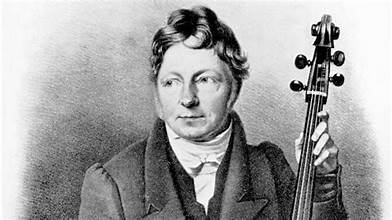
While in Paris, in 1808, Ries composed two cello sonatas, Opus 20 in C Major and Opus 21 in A Major. (The C Major is also in the link above, along with a third cello sonata, Opus 125 in G minor.) These were published two years later, and both dedicated to Bernhard Romberg, who had, along with Ries’ father, given him some of his early piano lessons. (Cello nerd alert: Romberg was responsible for several innovations regarding the cello, specifically ones pertaining to the instrument’s design and performance practice. He was also a composer, and scholars have suggested that his cello sonata in E minor influenced Johannes Brahms’ cello sonata in the same key.)
The A Major sonata is in four movements, a pretty standard configuration (sonata-form Allegro, slow movement, dance movement, and finally a rondo). Timbrally and stylistically, it falls very squarely into early Romantic Germany. Interestingly for this period, the sonata begins in A Major and ends in A minor; it may in fact be one of the first Romantic compositions to use this type of tonal structure. As the dedication to Romberg suggests and listening to the piece confirms for me, Ries is pretty clearly writing for a (skilled) amateur cellist; but what sticks out to me about this piece is that it isn’t boring. He utilizes a wide timbral and technical variety while still managing to compose in a way that’s relatively accessible to play. As is often the case with cello sonatas, there’s something in the interplay between piano and cello that I find to be a lot of fun—the ways that the overtones shift when the parts’ relative positions (melody vs accompaniment) reverse, the moments where the two instruments are acting on their own and then the moments where they’re so close together that it’s hard to tell them apart.
My classical music post for today is Ferdinand Ries’ Cello Sonata in A Major, Op. 21.


Leave a Reply