

Composers dedicate pieces of music to others for many reasons. Sometimes it is a way to thank or honour a mentor or patron. Sometimes it is to express friendship or love interest. Maybe the composer wants to remember someone close to them who has died. And maybe it’s just to celebrate a favourite place or event. This September, the Daily Classical Music Post is introducing you to a selection of works with dedications.
Le Voir Dit: Rondeau 17: Dis et sept cinq
The French poet and musician Guillaume de Machaut (1300–1377) was one of the most important composers of the 14th century. He was particularly brilliant at putting lyrics and music together. His output included what is the first complete surviving setting of the Mass Ordinary, Messe de Notre Dame, as well as ballades, motets, and chansons.
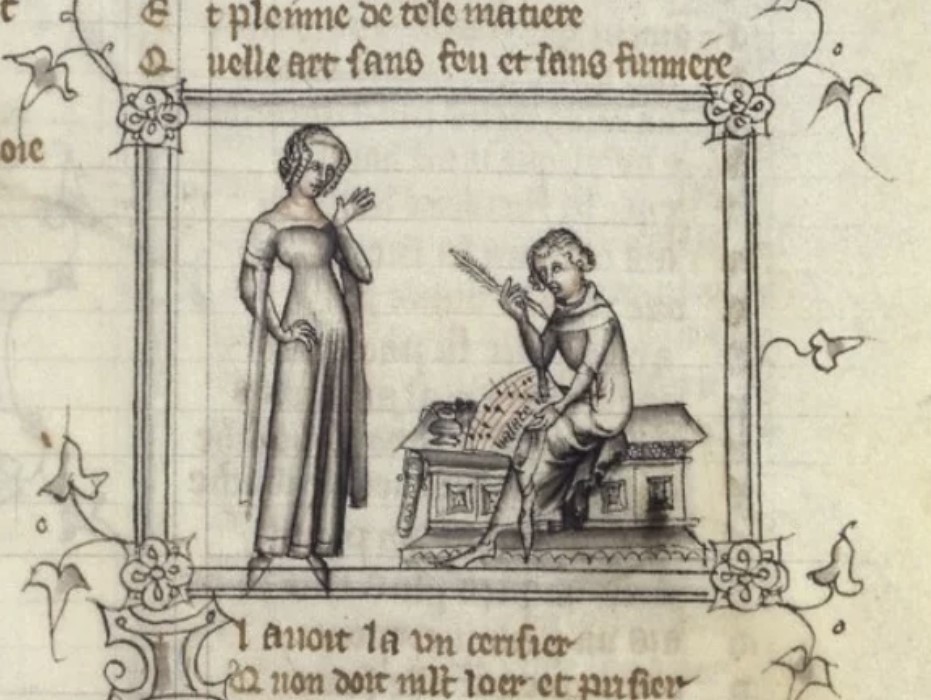
His most important work, however, is a massive collection of words and music on the topic of courtly love: Le Voir Dit. Written between 1361 and 1365, this somewhat autobiographical “true story” tells of an ageing composer who is brought back to life by the love of a 19-year-old girl. Georg Predota said, “Machaut’s discourse emphasizes the differences between the narrator’s expectations of Toute Belle, and her presentation of herself. Machaut sees Toute Belle as his student, muse, and as a submissive and admiring reader. Tout Belle, on the other hand is presented as an active reader intent on fulfilling the dual role of co-author and editor of the Voir Dit. In fact, the creation of Tout Belle is seen as Machaut’s greatest innovation in this genre. She is never the simply projection of the poet’s desire, ‘but exists as an independent and moving force in the narrative’.”
Melissa Lesnie said, “[Machaut] refers to this young admirer as Toute Belle throughout the poem, in which he eventually meets her and accompanies her on a pilgrimage. In one steamy scene their love is consummated as Venus enfolds them in a cloud. Machaut reveals his lady’s identity only at the end of the poem in the form of an anagram: her name was Péronne d’Armentières.”
A reviewer of one recording in The Daily Telegraph said, “Le Voir Dit is considered the masterpiece of the 14th-century French poet and composer Guillaume de Machaut. Whether or not it is a ‘true’ or autobiographically accurate tale, as the title implies, the nine songs embedded in Machaut’s anthology of verse and music speak plaintively and in a personal way of the pains and pleasures of love. . . . This music still sounds as flavoursome as it must have done 650 years ago.”
My classical music post for today is Guillaume de Machaut’s Le Voir Dit, Rondeau 17: Dis et sept cinq.


Leave a Reply