

Composers dedicate pieces of music to others for many reasons. Sometimes it is a way to thank or honour a mentor or patron. Sometimes it is to express friendship or love interest. Maybe the composer wants to remember someone close to them who has died. And maybe it’s just to celebrate a favourite place or event. This September, the Daily Classical Music Post is introducing you to a selection of works with dedications.
Erwin Schulhoff – 5 Pieces for String Quartet
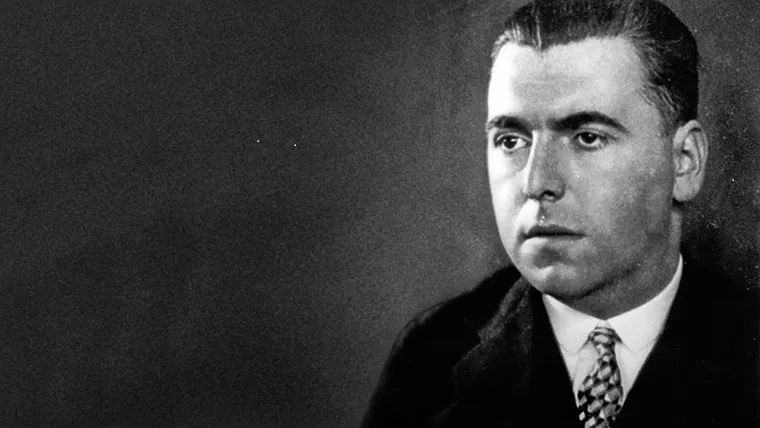
The Czech composer Erwin Schulhoff (1894–1942) was one of a number of Jewish composers whose works were labelled as “degenerate” during the Nazi regime. His music was blacklisted, and although for a time he was able to perform as a radio pianist under an assumed name, eventually he was discovered, arrested, and died in a German prison. His output, largely unknown today, is fascinating. He was one of the early classical composers to incorporate jazz in his works, and he also was influenced by Dadaism, which led to some extraordinary compositions (check out his Sonata Erotica [1919], available on YouTube, but be sure to be wearing headphones).
Andrew Gillett said, “Darius Milhaud, one of the composers in the group known as ‘Les Six’ . . . is the dedicatee of Erwin Schulhoff’s Five Pieces for String Quartet (1924). . . . Milhaud and Schulhoff were exact contemporaries and kindred spirits in the way they incorporated jazz and traditional music into their compositions.”
Joseph Way said, “The Five Pieces for String Quartet were composed in December of 1923 in Prague. While the work can be seen as an updated version of a baroque dance suite, the brevity and tone color of the work also suggest an affinity to the Stücke (Pieces) composed by proponents of the Second Viennese School (Schoenberg and the boys) then in vogue. In keeping with his Dada roots, Schulhoff opens this suite with a truly ‘offbeat’ Viennese Waltz; the 3 beats of the waltz rhythm placed within 4/4 meter! The second movement is a somewhat grotesque little serenade, replete with strummings and pluckings. The third movement is a vigorous dance, evoking Czech folk music, reminiscent of Bartok. The fourth movement, the longest of the set, is a sexy, slinky Tango. . . . The final movement is a properly frenetic tarantella.”
My classical music post for today is Erwin Schulhoff’s Five Pieces for String Quartet.


Leave a Reply