

For an Olympic athlete, there is nothing quite like standing on the winner’s podium after winning your event and hearing the national anthem of your country as the flag is raised. But what about the countries that have never won a gold medal? Those anthems are most likely barely known outside their countries. This August, the DCMP will introduce you to national anthems of some of the countries that have never won a gold medal.
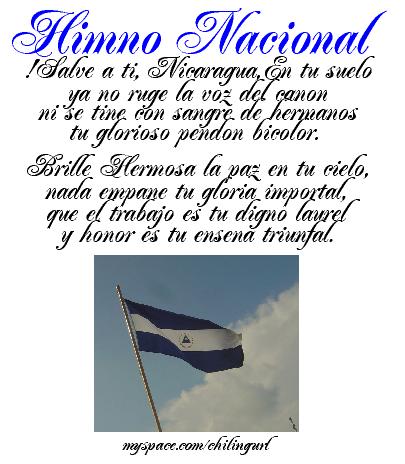
National Anthem: Nicaragua – Salve a ti, Nicaragua
Nicaragua has been competing in the Summer Olympics since 1968 (just missing the 1988 Games), but none of their athletes have won any medals so far. There are seven competitors from Nicaragua in Paris, six women and one man.
The music of Nicaragua’s national anthem was composed in the 18th century by the Spanish monk Fr. Ernesto o Anselmo Castinove. The music originally was a liturgical anthem. There were no words until the late 19th century. Over the years, different lyrics were used, and there also were times in the 19th century when different anthems replaced Castinove’s one. The one that was in favour for the longest was “Hermosa Soberana,” composed by General José Santos Zelaya’s son-in-law when Zelaya became president. When Zelaya was deposed, the anthem was replaced, but it’s still a popular song in Nicaragua.
In 1918, the decision was taken to reinstate Castinove’s music, and it was arranged by the Nicaraguan composer Luis A. Delgadillo. A contest was held to get new lyrics that reflected the sentiments of peace and work, not war. (Interestingly, Nicaragua’s anthem is the only one in Central and South America that doesn’t mention war.) The contest was won by the Nicaraguan poet Salomon Ibarra Mayorga. “Salve a ti, Nicaragua” was formally adopted as the national anthem in 1939. It was readopted in 1971.
It’s a bit difficult to hear the liturgical roots of the anthem; it actually has a bit of an Italianate feel, not surprising given that Delgadillo studied in Milan for a while. The ending is almost operatic; you can imagine a chorus on stage wandering around doing “things” as they sing.
My classical music post for today is Ernesto o Anselmo Castinove’s “Salve a ti, Nicaragua.”


Leave a Reply