

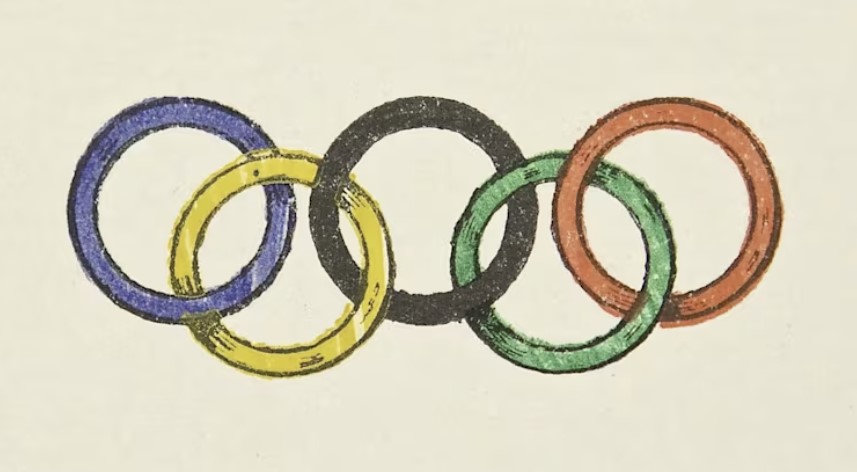
For an Olympic athlete, there is nothing quite like standing on the winner’s podium after winning your event and hearing the national anthem of your country as the flag is raised. But what about the countries that have never won a gold medal? Those anthems are most likely barely known outside their countries. This August, the DCMP will introduce you to national anthems of some of the countries that have never won a gold medal.
Greece National Anthem GreeK & English lyrics
Today, however, we will start with the national anthem of Greece, the birthplace of the Olympic Games. Greece has in fact won over 30 gold medals, so you’ve probably heard this anthem before now. This anthem is performed at the closing ceremony of the Games.
The Greek-Italian composer Nikolaos Mantzaros (1795–1872) is mainly known as the founder of the Ionian School of Music. He composed in a wide range of genres, including sacred music for the Orthodox Church and a mass based on traditional Greek chant. He also was an important music theorist.
The Greek poet Dionýsios Solomós wrote the poem “Hymn to Liberty” (Ὕμνος εἰς τὴν Ἐλευθερίαν) in 1823. Mantzaros set it to music in 1828. This choral version was dedicated to Otto, the first king of Greece. However, this wasn’t the official Greek anthem until Otto was ousted in 1862; “Hymn to Liberty” was adopted in 1862. It was later adopted as the national anthem of Cyprus in 1966.
The poem is written in 158 stanzas, and this makes it the longest anthem in the world. Usually, just the first two stanzas are sung; Mantzaros actually wrote two versions, one with all 158 stanzas, and one with just two.
The music was originally intended to be sung by a four-voice male choir, and Greek folk music elements are evident throughout. The whole poem describes scenes from the Greek War of Independence. It was arranged in the 20th century for military band, and the stirring music works really well for that instrumentation.
My classical music post for today is Nikolaos Mantzaros’ “Hymn to Liberty.”


Leave a Reply