

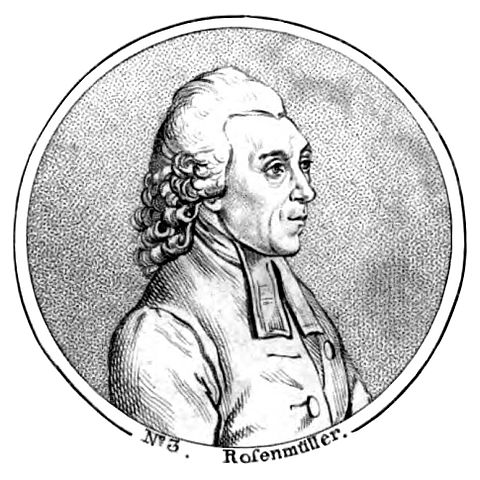
This June, the Daily Classical Music Post celebrates Pride Month by listening to music written by LGBTQIA+ composers throughout history.
Johann Rosenmüller – Magnificat anima mea Dominum
The German Baroque composer Johann Rosenmüller (1619–1684) had to flee Germany in 1655 after being accused of homosexual activities with choirboys. He ended up in Italy, and by 1658 was employed at St Mark’s in Venice. He was able to return to Germany a few years before he died, and even landed a pretty nice job in Wolfenbüttel at the court of a duke.
Gerald Fenech said, “In 1654 he became director of music in absentia to the Altenburg Court, however, in the spring of the following year Rosenmüller lost all his positions and fled from Leipzig. . . . From being the star of the city’s musical scene he became a persona non grata overnight, and from then on he led a life in the shadows. Following this harrowing experience, Rosenmüller’s fortunes changed dramatically. Indeed, his music was almost completely ignored, and for the next three decades he was only spoken of in whispers. But not all was doom and gloom. Finding himself in this dire situation, Rosenmüller fled to Italy and by 1658 he was employed at Saint Mark’s in Venice. He composed many vocal pieces while teaching at an orphanage for girls—the Ospedale della Pietà. The works of Giovanni Legrenzi and Arcangelo Corelli were among his Italian influences, and his sacred works betray the style of Heinrich Schütz.”
The Magnificat is a terrific example of Rosenmüller’s musical genius. Colin Clarke said, “The Magnificat . . . is beautifully varied, passages shot through with light against heavier, darker counterpoint and low-pitched cadences. We can make a parallel between Schütz and Rosenmüller in their melding of Germanic and Italianate styles, but distinguish them by realising that the Italianate is more pronounced in Rosenmüller.”
My classical music post for today is Johann Rosenmüller’s Magnificat.


Leave a Reply