

“The world’s favorite season is the spring.”—Edwin Way Teale
Now is the Month of Maying.mp4
Throughout the history of Western classical music, the month of May in particular has been associated with spring. One of the most obvious examples of this is the ballett “Now Is the Month of Maying,” composed by English Renaissance composer Thomas Morley (1557–1602) in 1595. Not only is this one of the most famous choral works from that time period, but it’s also utterly delightful, whether you’re singing it or listening to it.
And no, that’s not a misspelling of “ballet”! A ballett was an English song form that originated from Italian 16th-century song. As per more modern terminology, it’s a type of madrigal. According to Lionel Pike, a ballett is “strophic, binary with repeats, using nonsense syllables, with light-hearted texts set syllabically, and in a major tonality.” Funnily, most of the masters of this form were named Thomas (Morley, Thomas Weelkes, Thomas Tomkins), although there were of course others as well.
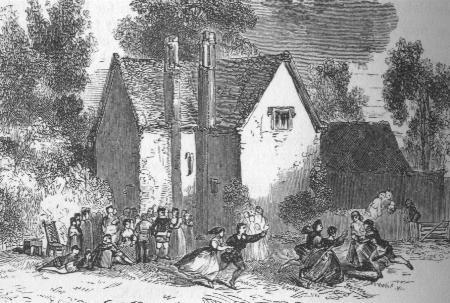
Like many of the secular songs of England in the 16th and 17th centuries, this song is incredibly bawdy, hiding behind the seemingly innocuous topic of spring dancing. The “barley break” in the final stanza was an old English country game that tended to lead to a lot of physical contact between men and women, and people often used the term to mean something similar to today’s “roll in the hay.”
My classical music post for today is Thomas Morley’s “Now Is the Month of Maying.”


Leave a Reply