

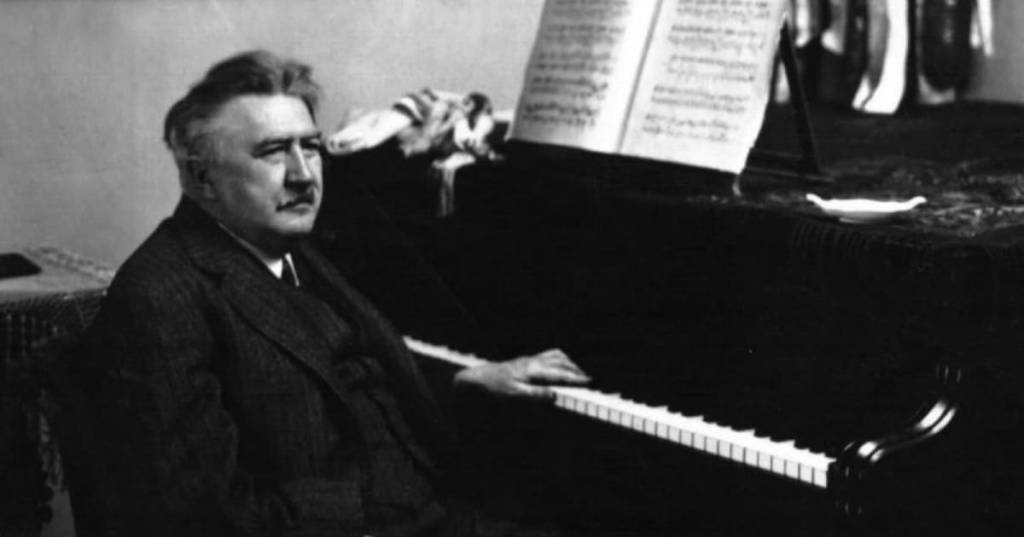
Chamber music, sometimes described as “the music of friends,” is generally used to refer to music composed for a small group of instruments or voices, with one performer to a part. The intimacy of chamber music makes it a perfect genre for compositions marking important events or for unusual combinations of instruments. This April, the Daily Classical Music Post will introduce you to some of these very special works.
The Czech composer Josef Suk (1874–1935) studied with Antonin Dvořák (and married Dvořák’s daughter). He also was a violinist and performed often with a string quartet. His music, like that of his mentor, often includes Bohemian folk music tunes. His works have been described as “morbid”; he composed his own funeral march and he also wrote music on themes of pain, the meaning of life, and sadness. Suk is one of the leading composers of the Czech Modernist movement of the early 20th century.
Suk’s final work, Sousedská, was composed for five violins, double bass, cymbals, triangle, side drum, and bass drum, an interesting combination! This was Suk’s last piece. He wrote a note on the title page of the manuscript: “Exemplifying a composition where the composer needn’t be skilled in anything, and nor do the players! The musical demand and requirements on the player’s technique allow even young pupils of music schools to play it.” The title of the work is also the name of a slow-ish Bohemian dance in ¾ time.
Unusually, this piece is not a typically morbid Suk work. Christopher Fifield said, “If the Sousedska was his last work, Suk died a happy man (if rather prematurely at 61). . . . It is indeed a joyfully sunny piece of music and full of fun.” An interesting side note is that Suk himself played the third violin part in the premiere of Sousedská not long before he died.
My classical music post for today is Josef Suk’s Sousedská.


Leave a Reply