

The entertainment industry loves biopics. It doesn’t really matter if the details are exaggerated or just plain untrue: all that matters is telling a good story! Biopics about classical music composers and musicians can range from the mostly factual to out-and-out fanciful. This March, the Daily Classical Music Post will look at some of these films.
Daniil Trifonov – Impromptu in A flat major, Op. 29 (third stage, 2010)
Choices, choices! Do I watch A Song to Remember (1945), with Cornel Wilde as the Polish pianist and composer Frédéric Chopin (1810–1849), or do I opt for Impromptu (1991), with—wait for it—Hugh Grant as the consumptive musician? Why not both?
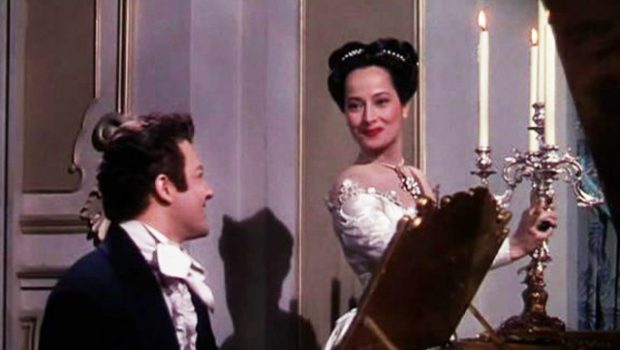
A Song to Remember was produced during World War II, so Chopin’s Polish patriotism is front and centre. There’s a whole battle over Chopin between his teacher, Jozef Elsner, and his lover, George Sand, that culminates in Chopin ending his relationship with Sand because she doesn’t support his love for Poland. That was totally made up; Sand was a fervent supporter of Polish nationalism. But the real reason for their breakup—Chopin taking Sand’s estranged daughter’s side in an argument—wouldn’t have been as sexy, I guess. Cornel Wilde received an Academy Award nomination for his portrayal, although he only received third billing behind Paul Muni as Elsner and Merle Oberon as Sand. Chopin’s music throughout is played by the pianist José Iturbi, although the hands shown actually playing are those of the pianist Ervin Nyiregyházi.
Talk about sexy: Hugh Grant as, in the words of Terrence Rafferty, “a brilliant caricature of the Romantic ideal of the artist; he gives the character an air of befuddled unworldliness, and punctuates his readings with delicately timed tubercular coughs.” Impromptu focuses on the love affair between Chopin and Sand (portrayed by the marvellous Judy Davis), so covers much less ground than A Song to Remember. It’s really pretty gossipy and frivolous, and there’s really nothing about Polish patriotism in this film. But there is a lot of Chopin’s music, as well as some by Franz Liszt and Ludwig van Beethoven, so that’s nice. Grant and Julian Sands (as Liszt) were coached so it looked like they were actually playing the very difficult works for piano. No performers are given credit, unlike Iturbi and Nyiregyházi in the earlier film.
I’m not sure that either of these films really help viewers and listeners to understand who Chopin really was. But at least both films have some wonderful music and there are some terrific performances as well. And a fun little note about the candelabra that Sand places on the piano in A Song to Remember: Liberace was so impressed by that scene that he never performed without a candelabra on his piano.
My classical music post for today is Frédéric Chopin’s Impromptu in A flat major, Op. 29.


Leave a Reply