

Bedřich Smetana: Má vlast: “Vltava”
Happy New Year! The Daily Classical Music Post has been on Substack for just over a year. Thank you to everyone who subscribes to and supports the DCMP. This January, I will be sharing some of the more popular posts from 2022 and 2023. A new theme will begin in February!
[First published 9 June 2023]
“That music always round me, unceasing, beginning, yet long untaught I did not hear, / But now the chorus I hear and am elated.”—Walt Whitman
Many composers get their inspiration from nature. There are so many beautiful places around the world. This June, the Daily Classical Music Post will travel around the world to national parks and reserves to discover the inspiration for some wonderful pieces of music!
Šumava National Park (Bohemian Forest National Park) in the South Bohemian region of the Czech Republic was originally the Protected Area of Šumava; it was designated a UNESCO Biosphere Reserve in 1990 and officially became a national park in 1991. The park, one of the most extensive European forest landscapes, experiences strong winds and a harsh climate throughout the year, all of which is getting more extreme due to the effects of climate change.
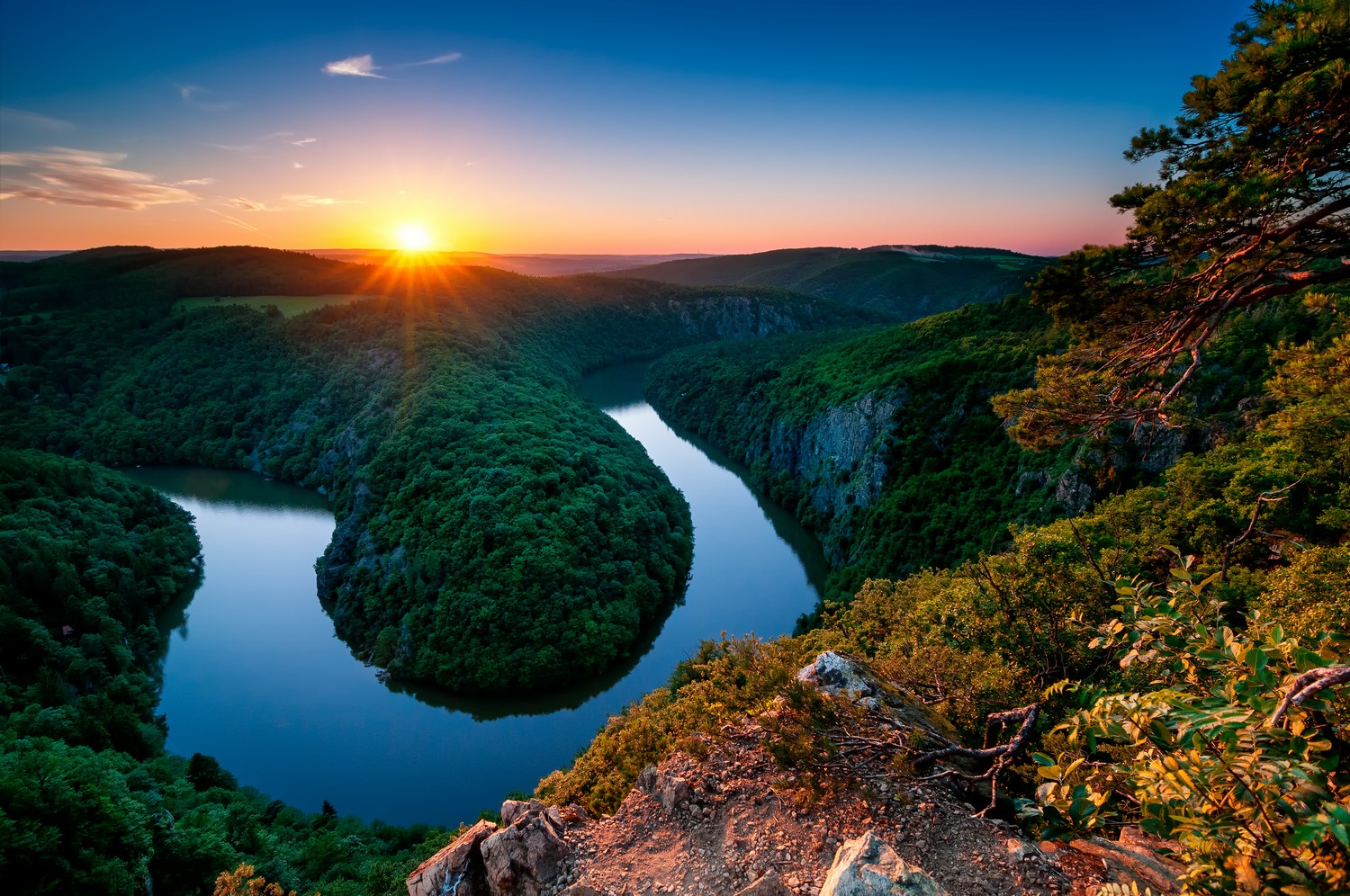
The great Czech river, Vltava, originates on the eastern slope of the Black Mountains in Šumava National Park. Visitors can hike to the spring where this mighty river begins its journey. The peat bogs, part of the Source of the Vltava Nature Reserve, form the watershed of the Black and North Seas.
The Czech composer Bedřich Smetana (1824–1884) is widely recognized as the father of Czech music. Smetana created Czech opera, and his musical style in all of his works reflects the Bohemian national spirit. He was a champion of other Czech composers and also supported the Bohemian national movement in the 1840s.
In 1874, Smetana completed his cycle of symphonic poems, Má vlast (My homeland). Má vlast contains so many wonderful images of the countryside, history, and legends of Bohemia. But it is the second movement, “Vltava,” which is the most evocative. Smetana described the piece: “The composition describes the course of the Vltava, starting from the two small springs, the Cold and Warm Vltava, to the unification of both streams into a single current, the course of the Vltava through woods and meadows, through landscapes where a farmer’s wedding is celebrated, the round dance of the mermaids in the night’s moonshine: on the nearby rocks loom proud castles, palaces and ruins aloft. The Vltava swirls into the St John’s Rapids; then it widens and flows toward Prague, past the Vyšehrad, and then majestically vanishes into the distance, ending at the Labe.”
My classical music post for today is Bedřich Smetana’s Má vlast: “Vltava.”


Leave a Reply