

Louis Moreau Gottschalk: “Columbia ‘Caprice américain’”
Oscar Wilde famously said, “Imitation is the sincerest form of flattery that mediocrity can pay to greatness.” It isn’t always the case, at least in classical music, that the imitator is mediocre; many compositions that are based on another composer’s work are just as interesting—and sometimes even more interesting—than the original. This October, the Daily Classical Music Post will look at variations, fantasias, and other compositions that are based on another composer’s work.
Gottschalk: Columbia-Caprice Americain
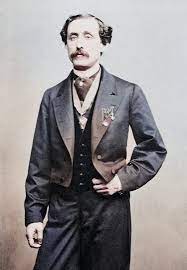
The American composer and pianist Louis Moreau Gottschalk (1829–1869) began playing the piano when he was about five years old. His father was Jewish and his mother was Creole, and the different types of music that he heard growing up in Louisiana was a great influence on his later compositions, particularly Creole music, but also American popular music. He was particularly taken with Stephen Foster’s music, and he based several compositions on Foster’s songs, including variations on “Camptown Races” in “The Banjo” and “My Old Kentucky Home” in “Columbia ‘Caprice américain’.”
Jeremy Nichols said of Gottschalk’s “Columbia ‘Caprice américain’,” which was composed in 1859, “This exuberant treatment of Stephen Foster’s My Old Kentucky Home is among Gottschalk’s most appealing works. Its catchy tune and rhythmic bounce stay in the mind for days. Although it sounds easy, it is an exacting piece to play, needing a left hand of machine-like accuracy and not a little stamina to cope with the athletic leaping of the accompaniment, punctuated by coruscating runs in the treble. With the finishing post in sight, Gottschalk piles on further pianistic pressure requesting, in tempo, left hand jumps of two octaves. Columbia, in this writer’s experience, is the earliest example of what was later to be called ‘stride piano’, a style developed in the 1930s.”
My classical music post for today is Louis Moreau Gottschalk’s “Columbia ‘Caprice américain’.”


Leave a Reply