

Johann Ulrich Steigleder: Tabulaturbuch
Oscar Wilde famously said, “Imitation is the sincerest form of flattery that mediocrity can pay to greatness.” It isn’t always the case, at least in classical music, that the imitator is mediocre; many compositions that are based on another composer’s work are just as interesting—and sometimes even more interesting—than the original. This October, the Daily Classical Music Post will look at variations, fantasias, and other compositions that are based on another composer’s work.
Johann Ulrich Steigleder – Tabulaturbuch (1627)
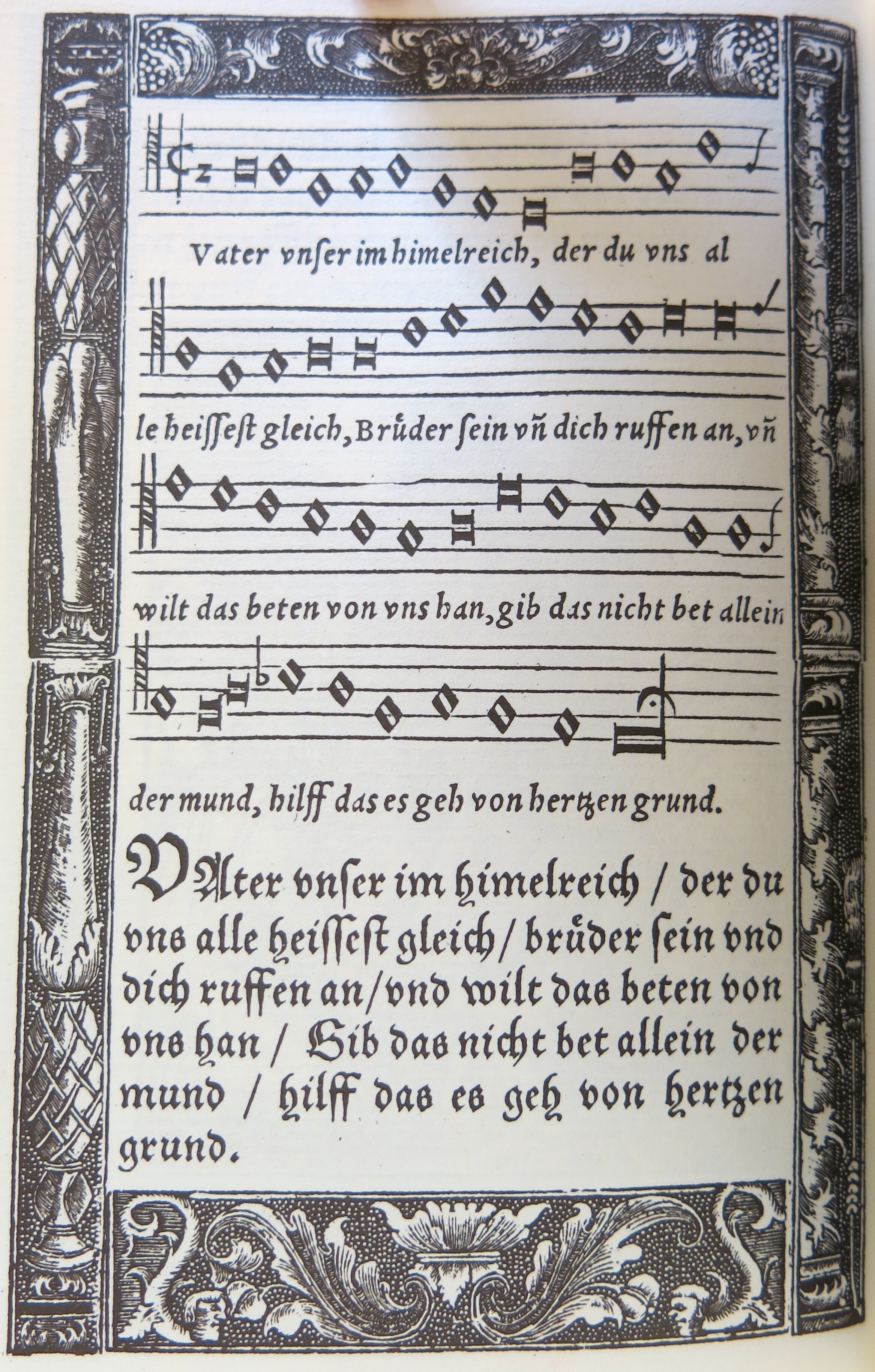
The German theologian Martin Luther composed over 30 hymns, many of which were meant to be instructional as well as inspirational. In 1538, he composed a version of the Lord’s Prayer, “Vater unser im Himmelreich,” which includes specific catechism questions. It’s most likely that Luther took an older tune, composed by our old friend Anonymous, and adapted it into what is now familiar to many churchgoers as either “Vater unser” or “Old 112th.”
The German composer and organist Johann Ulrich Steigleder (1593–1635) composed the Tabulaturbuch in 1627. This work is 40 variations on Martin Luther’s choral “Vater unser im Himmelreich.” Organists can pick which variations and in what order they want to play them. Some of the variations include another instrument or vocalist.
Anna Steppler said that in the “39th variation in Johann Ulrich Steigleder’s Tabulaturbuch darinnen daß Vater Unser of 1627 . . . the use of a triple metre is surely allegorical: it can hardly be coincidental that it is a number which manifestly relates to Trinitarian ideas, and can also be viewed as 13 x 3 (13 being a number which traditionally represents sin).” Many scholars have discussed how the organ in particular was a great way to preach and encourage prayer through music, and Steigleder certainly would have understood this concept.
My classical music post for today is Johann Ulrich Steigleder’s Tabulaturbuch.


Leave a Reply