

Phyllis Chen: Double Helix
September is a month of unusual holidays, including “No Rhyme, No Reason Day,” “Wonderful Weirdos Day,” “Ceiling Fan Day,” and “Punctuation Day” (a personal favourite). To celebrate unusual holidays, this September the Daily Classical Music Post will explore music composed for unusual instruments either in ensembles or featured in a soloist capacity.
Phyllis Chen – Double Helix for toy piano and bowls
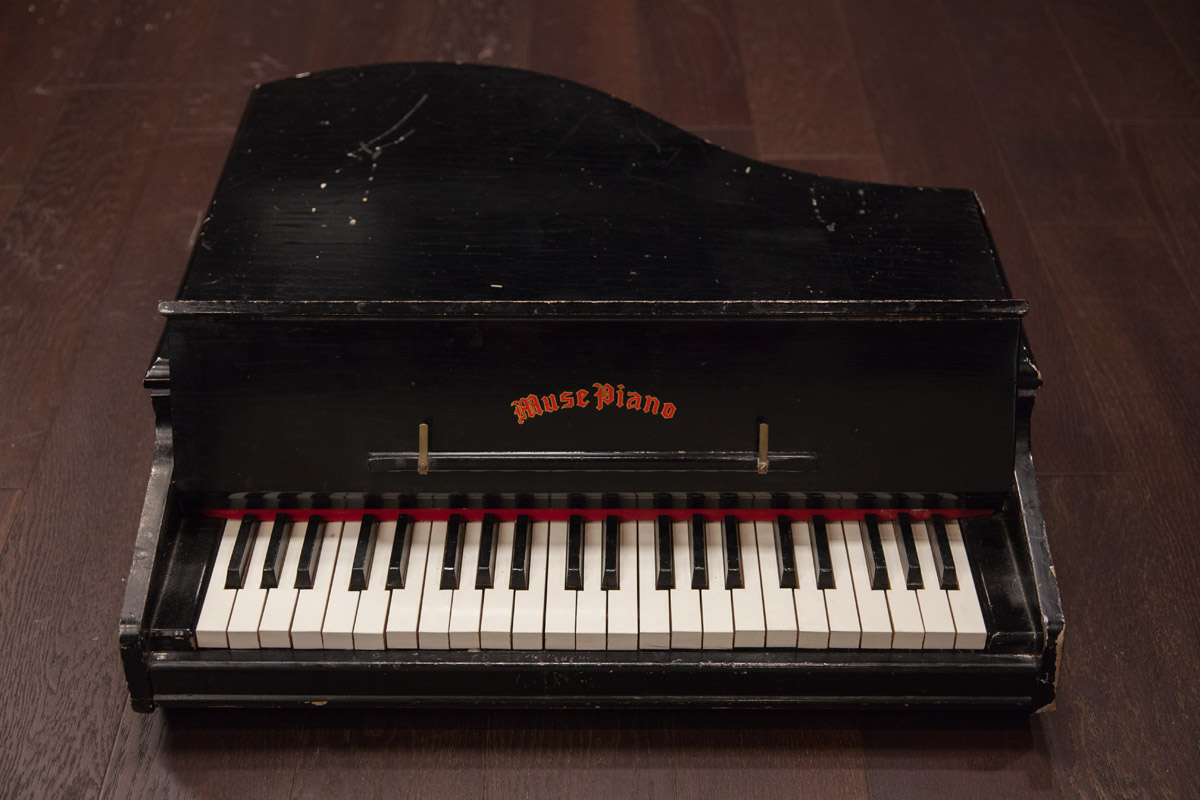
The toy piano uses round metal rods rather than strings to produce sound. They were first made in the mid-19th century and to begin with were uprights, although now toy grand pianos are very common. The range is anywhere from one to three octaves, and some do not have functioning black keys (either none at all or just painted on). The original function was, as the German name (kinderklavier) makes clear, for children, but particularly in the 20th century, it has been used in serious contemporary classical music (most famously, perhaps, in John Cage’s Suite for Toy Piano).
The American composer Phyllis Chen (born 1988) is a great champion of the toy piano, an instrument that she only discovered as an adult. She founded the UnCaged Toy Piano composition competition and festival in 2007. Double Helix (2009) is a fascinating combination of toy piano and bowls; the performer plays the toy piano with their right hand and the bowls with a mallet in their left hand. In an interview with Tom Tom Mag, Chen said, “Though the toy piano part is virtuosic, I am used to playing the keyboard with my eyes closed. For this piece, my focus is really on playing the bowls while my right hand is coasting on my familiarity with the topography of the toy piano. The bowls do need to be placed in a certain way. I usually compose next to a toy piano so the physical experience of improvising and playing seems to dictate a certain level of the composition. With ‘Double Helix,’ I had an idea in mind and knew what instruments/bowls I wanted to use. One day I had a watershed moment and wrote out the entire thing in a notebook. I told myself that I would play what I wrote, even though it was written away from a keyboard.”
My classical music post for today is Phyllis Chen’s Double Helix.


Leave a Reply