

Ralph Vaughan Williams: Concerto for Bass Tuba: I. Allegro Moderato
September is a month of unusual holidays, including “No Rhyme, No Reason Day,” “Wonderful Weirdos Day,” “Ceiling Fan Day,” and “Punctuation Day” (a personal favourite). To celebrate unusual holidays, this September the Daily Classical Music Post will explore music composed for unusual instruments either in ensembles or featured in a soloist capacity.
Concerto for Bass Tuba and Orchestra in F Minor, IRV. 92: I. Allegro moderato
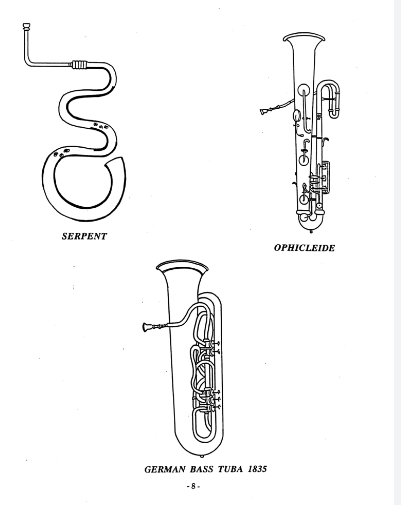
The tuba is the lowest-pitched instrument in the brass family, although some people say that the bass trombone comes close. The tuba developed from a 17th-century instrument called the serpent, which morphed into the ophicleide in 19th-century France, and finally became the instrument we know in mid-19th-century Germany. The tuba reinforces the lowest notes in all of the other sections of the orchestra, and also occasionally stands out in small solo passages. It is a main instrument in concert bands, brass bands and military bands, and famously provides the ooom-pah in polka and waltz music. However, as Vasilios Zachery Tidwell said, “Evolving from novelty pieces accompanied by wind or brass bands, tuba solo music was rare and undistinguished until the middle of the twentieth century.”
The first classical work to really explore what the tuba could do as a solo instrument was the Concerto for Bass Tuba (1954) by the English composer Ralph Vaughan Williams (1872–1958). In this three-movement piece, the tuba’s capabilities and range are explored and celebrated. Vaughan Williams drew on his knowledge of British brass band and military band music. Although the concerto was not immediately successful, it did not take very long for it to become one of the most popular pieces for the tuba.
Michael Kennedy said, “There is nothing patronising or parodistic about this concerto. Vaughan Williams wanted to give the tuba a rare chance to take the centre of the stage and went to considerable effort to study its capabilities. True, its elephantine humour is exploited in the first movement, but its unsuspected agility is given rein too; the slow movement, ‘Romanza,’ has a principal theme of lyrical beauty such as Vaughan Williams might have awarded to the viola; and in the Finale, the tuba romps amid the dancing strings, like Falstaff among the fairies in Windsor Forest. Not a major work, but a major minor work.”
My classical music post for today is Ralph Vaughan Williams’s Concerto for Bass Tuba: I. Allegro Moderato.


Leave a Reply