

Cecil Coles: “Cortège”
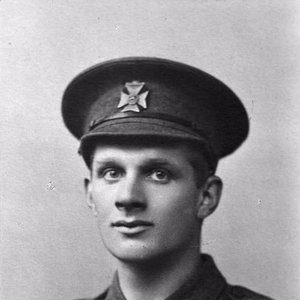
First posted 11 November 2011
The First World War Soundtrack – Opening Titles (Cortège)
I share a different piece of classical music every day on Google+, linked in some way to the date. For those of you not yet on Google+, here is my Daily Classical Music Post for today. If you are intrigued by this, come and join me over there, and you will see my classical music selections every day! (You’ll also be able to look back at all of my posts starting at the end of July.)
*Daily Classical Music Post*
On this day, the 11th of November, recognized in various countries as Armistice Day, Remembrance Day, and Veterans Day, we remember all of those who have fought in wars. But this particular date has special significance; it is the date when hostilities ceased on the Western Front in World War I; the armistice was signed between the Allies and Germany and took effect at the “eleventh hour of the eleventh day of the eleventh month” of 1918. Most of the allied nations adopted this date as a national holiday. After World War II, the name of this holiday was changed to Veterans Day in the United States and to Remembrance Day in the United Kingdom and the Commonwealth.
Although there have been many more wars since “the war to end all wars,” and although World War I took place nearly a century ago, there is still the perception that the world changed irrevocably in 1914 to 1918. In many countries, the term “the Lost Generation” is used to refer to the cohort that came of age in this period. In the United Kingdom, this term specifically refers to those who died in the war; many feel that “the flower of youth” and “the best of the nation” died in World War I.
From a classical music point of view, this is, sadly, true. George Butterworth and Ernest Farrar are two of the most well known British composers of this generation who died in the war. But I would like to introduce you to one of the least well known, but perhaps the greatest, of the “lost” British composers: Cecil Coles (1888–1918).
Coles was Scottish. He was a great friend of Gustav Holst, who kept in touch with Coles throughout the younger man’s active service in Europe. Coles continued to compose even while in the field. His final composition, the four-movement orchestral suite Behind the Lines, was composed in 1917, and he sent drafts of the scores for two of the movements to Holst. And today’s musical selection is the second movement, “Cortège.”
They shall grow not old,
As we that are left grow old:
Age shall not weary them,
Nor the years condemn,
At the going down of the sun
And in the morning
We will remember them.
– Laurence Binyon (1869–1943)


Leave a Reply