

Ludwig van Beethoven: String Quartet No. 16 in F Major Op 135
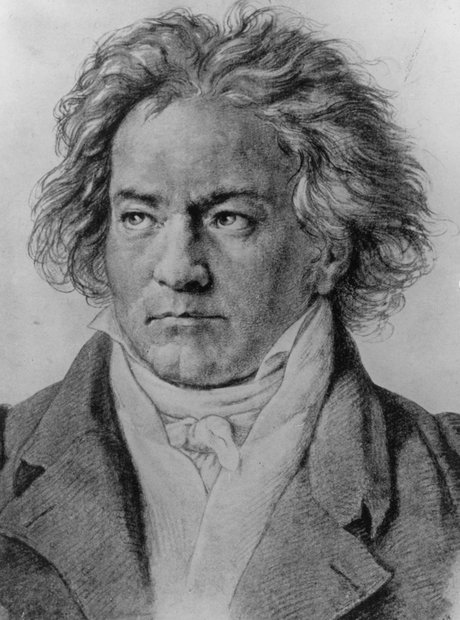
“Why should I cry for not being an apple, when I was born an orange, I’d be crying for an illusion, I may as well cry for not being a horse.”—Donna Williams
Disabled people have always been seen as less than, as not able to work in particular fields, and as in one way or another diminished. This July, the Daily Classical Music Post will introduce you to the music of composers who have broken barriers and proved that disability doesn’t mean inability.
A note: although some musicologists and armchair psychologists are retroactively deeming certain composers from the Classical and Romantic periods as ADHD, autistic, or otherwise neurodivergent, I am not going to assume that is the case.
Beethoven String Quartet Op. 135 in F Major – Ariel Quartet (full)
One of the most well-known composers with a disability is the German composer Ludwig van Beethoven (1770–1827). The reasons why he lost his hearing are disputed, but what is not in doubt is that by 1814 he was almost completely deaf. Many of his greatest works were composed in his final years.
Beethoven’s String Quartet No. 16 in F Major Op 135 was the last major work that he completed, in 1826. The premiere took place in 1828, one year after he died. It is the shortest of his “late quartets” (the six quartets composed in 1825 and 1826). John Mangum describes Op 135 as “congenial and fun-loving”; contemporary musicians were not as flattering (Louis Spohr called all of the late quartets “indecipherable, uncorrected horrors”). The fourth movement has inscriptions in the score added by Beethoven: “Der schwer gefaßte Entschluß” (The Difficult Decision), “Muß es sein?” (Must it be?), and “Es muß sein!” (It must be!). As always, scholars are divided as to the reason for this, but I’ll let Beethoven explain it himself: “Here, my dear friend, is my last quartet. It will be the last; and indeed it has given me much trouble. For I could not bring myself to compose the last movement. But as your letters were reminding me of it, in the end I decided to compose it. And that is the reason why I have written the motto “The decision taken with difficulty—Must it be?—It must be, it must be!”
My classical music post for today is Ludwig van Beethoven’s String Quartet No. 16 in F Major Op 135.


Leave a Reply