

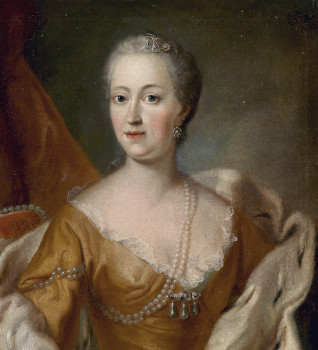
Maria Theresia von Paradis: overture to Der Schulkandidat
“Once you choose hope, anything’s possible.”—Christopher Reeve
Disabled people have always been seen as less than, as not able to work in particular fields, and as in one way or another diminished. This July, the Daily Classical Music Post will introduce you to the music of composers who have broken barriers and proved that disability doesn’t mean inability.
A note: although some musicologists and armchair psychologists are retroactively deeming certain composers from the Classical and Romantic periods as ADHD, autistic, or otherwise neurodivergent, I am not going to assume that is the case.
Maria Theresia von Paradis – Overture to Der Schulkandidat – Premiere Recording!
The Austrian composer and pianist Maria Theresia von Paradis (1759–1824) lost her sight at a very early age. She was the inspiration for the first school for the blind, the Institute for Blind Youth, which was opened in Paris in 1784. She was friends with many famous musicians of the day, including Wolfgang Amadeus Mozart, who composed his Piano Concerto No 18 for her. She toured Europe and was hailed as a virtuoso.
She composed many works for piano and voice, including operas and cantatas, but she most likely did NOT compose the famous Sicilienne that is attributed to her. Selina Mills says, “Paradis’s story has always struck me as intriguing not only because of her talent, but also because we know so little about her.”
Paradis composed the opera Der Schulkandidat in 1792. The overture is the only section of the opera that was published, and it also is her only surviving orchestral work. It is reminiscent of a gigue with its 6/8 time signature. It is intriguing to think about what the opera would have been like.
My classical music post for today is Maria Theresia von Paradis’s overture to Der Schulkandidat.


Leave a Reply