

Jeff Beal: “The Salvage Men: Salvage”
“It is a waste of time to be angry about my disability.”—Stephen Hawking
Disabled people have always been seen as less than, as not able to work in particular fields, and as in one way or another diminished. This July, the Daily Classical Music Post will introduce you to the music of composers who have broken barriers and proved that disability doesn’t mean inability.
A note: although some musicologists and armchair psychologists are retroactively deeming certain composers from the Classical and Romantic periods as ADHD, autistic, or otherwise neurodivergent, I am not going to assume that is the case.
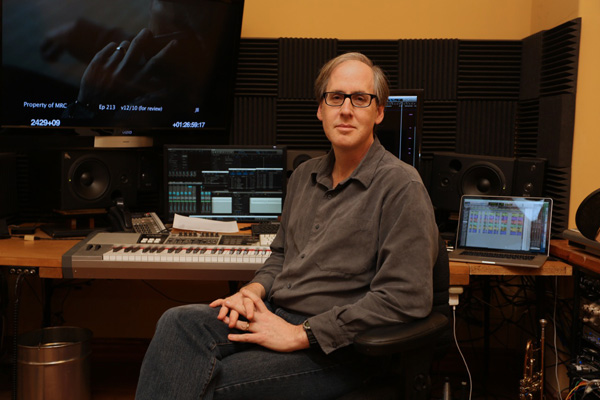
The American composer Jeff Beal (b. 1963) has composed music for film, television, and also has a large catalogue of classical compositions. He was diagnosed with multiple sclerosis in 2007. He says that his MS is relatively stable because he keeps really busy and as active as possible. He says that through his work and a strict diet and therapy regime, he has been in remission for many years, but “like most people who have this, it (neuropathic pain) never really goes away.”
In 2016, Beal composed his first a cappella choral work, “The Salvage Men,” as a way to confront his feelings about what his life was like dealing with MS. The text for this five-movement work comes from Oscar Wilde and Kay Ryan. “Salvage,” the final movement, begins, “The wreck is a fact. / The worst has happened.” and ends with “Thanks be to God—again— for extractable elements which are not carriers of pain, for this periodic table at which the self-taught salvagers disassemble the unthinkable to the unthought.” Beal says, “[I]t was in the poetry of Kay Ryan I found a wholly fresh, contemporary view on the themes of transformation and our chosen response to pain.”
My classical music post for today is Jeff Beal’s “The Salvage Men: Salvage.”


Leave a Reply