

Hikari Ōe: Collected music
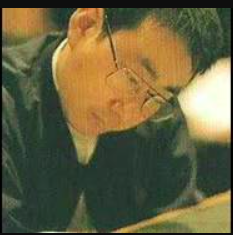
“If we are to achieve a richer culture, we must weave one in which each diverse human gift will find a fitting place.”—Margaret Meade
Disabled people have always been seen as less than, as not able to work in particular fields, and as in one way or another diminished. This July, the Daily Classical Music Post will introduce you to the music of composers who have broken barriers and proved that disability doesn’t mean inability.
A note: although some musicologists and armchair psychologists are retroactively deeming certain composers from the Classical and Romantic periods as ADHD, autistic, or otherwise neurodivergent, I am not going to assume that is the case.
The Japanese composer Hikari Ōe (b. 1963) was born autistic and developmentally disabled. He began speaking at the age of six, using bird call. His parents recognised his musical talent and he began piano lessons soon after. His early works were mainly for piano, but as an adult he began to compose for chamber ensembles.
His father, a famous author, has written both fact and fictional works about his relationship with his son. Lindsley Cameron says that many scientists agree that had Kenzaburo Ōe “accepted the prevailing medical wisdom of the time and resigned himself to the child’s being forever mute and vegetative, that is precisely what Hikari would have been.” Instead, Kenzaburo Ōe nurtured and encouraged his son.
Hikari Ōe’s music is very Western in style, and it also is on the surface quite sentimental and simple. But it also is intensely emotional and beautiful as well as inspirational. Most of his works are short (under three minutes long), so I am sharing a collection rather than just one work.
My classical music post for today is the music of Hikari Ōe.


Leave a Reply